How to Get Your Books Back on Track
One business owner once admitted:
“I stopped opening the bank statements around August.”
It was February.
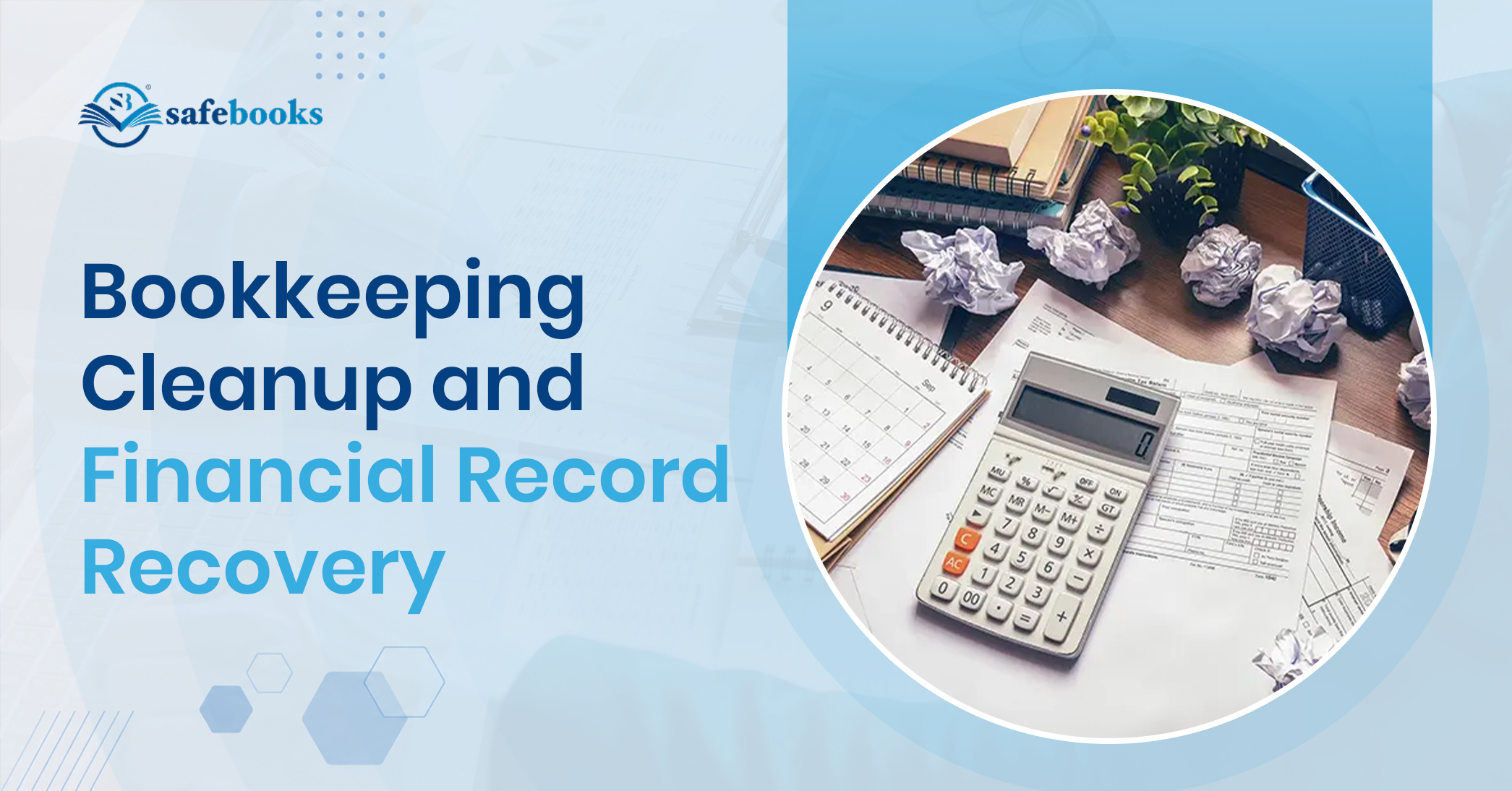
The business had grown quickly, the part-time bookkeeper had left, and daily operations kept taking priority. By then, months of transactions needed review, bank accounts needed reconciliation, and the financial reports were no longer reliable.
This is a common problem when a business outgrows the accounting process that once worked.
A bookkeeping backlog is fixable. With the right support, businesses can clean up historical records, restore accurate reporting, and build a process that keeps the books current.
Key Takeaway
A bookkeeping backlog happens when financial records fall behind and no longer reflect the current position of the business. Outsourced accounting teams help clean up transactions, reconcile accounts, update records, and create a process to keep books current going forward.
What Is a Bookkeeping Backlog?
A bookkeeping backlog is when a business’s financial records are not updated consistently, leaving transactions, reconciliations, and reports incomplete.
In simple terms:
The business is operating today, but the books are still showing the past.
A bookkeeping backlog may include:
- Unrecorded transactions
- Missing receipts
- Unreconciled bank accounts
- Credit card activity that has not been reviewed
- Expenses waiting to be categorized
- Outdated financial reports
A small delay can often be managed.
The challenge comes when weeks become months.
At that point, the books stop being a useful tool for understanding the business.
How Do Books Fall Behind in the First Place?
Most bookkeeping backlogs do not happen overnight.
They usually build slowly.
A business owner may start by handling the books themselves.
Then the company grows.
More customers arrive.
More expenses appear.
More vendors need payment.
More transactions flow through the accounts.
Suddenly, bookkeeping becomes a task that gets pushed to the end of the week or month.
Common reasons businesses fall behind include:
- Rapid business growth
- A busy season
- A bookkeeper leaving
- Too many responsibilities assigned to one person
- Lack of a consistent monthly process
- Multiple accounts and payment systems
The important thing to understand is:
The problem is usually the process, not the people.
What Does an Unresolved Bookkeeping Backlog Cost a Business?
A backlog does more than create unfinished accounting work.
It affects how confidently owners can run the business.
Delayed Decisions
When financial reports are outdated, owners may make decisions without knowing current cash flow or profitability.
Tax Preparation Challenges
Incomplete books can make tax preparation more stressful because records need to be reviewed and organized under deadlines.
Financing Delays
Banks, lenders, and investors often request updated financial information.
A bookkeeping backlog can slow those conversations.
Limited Financial Visibility
Business owners may not know:
- Which expenses are increasing
- How profitable the business is
- How much cash is available
Clean books are not only about compliance.
They help owners make better decisions.
How Does an Outsourced Accounting Team Clean Up the Books?
A professional cleanup process follows a structured approach.
The goal is not just entering old transactions.
The goal is creating accurate financial records.
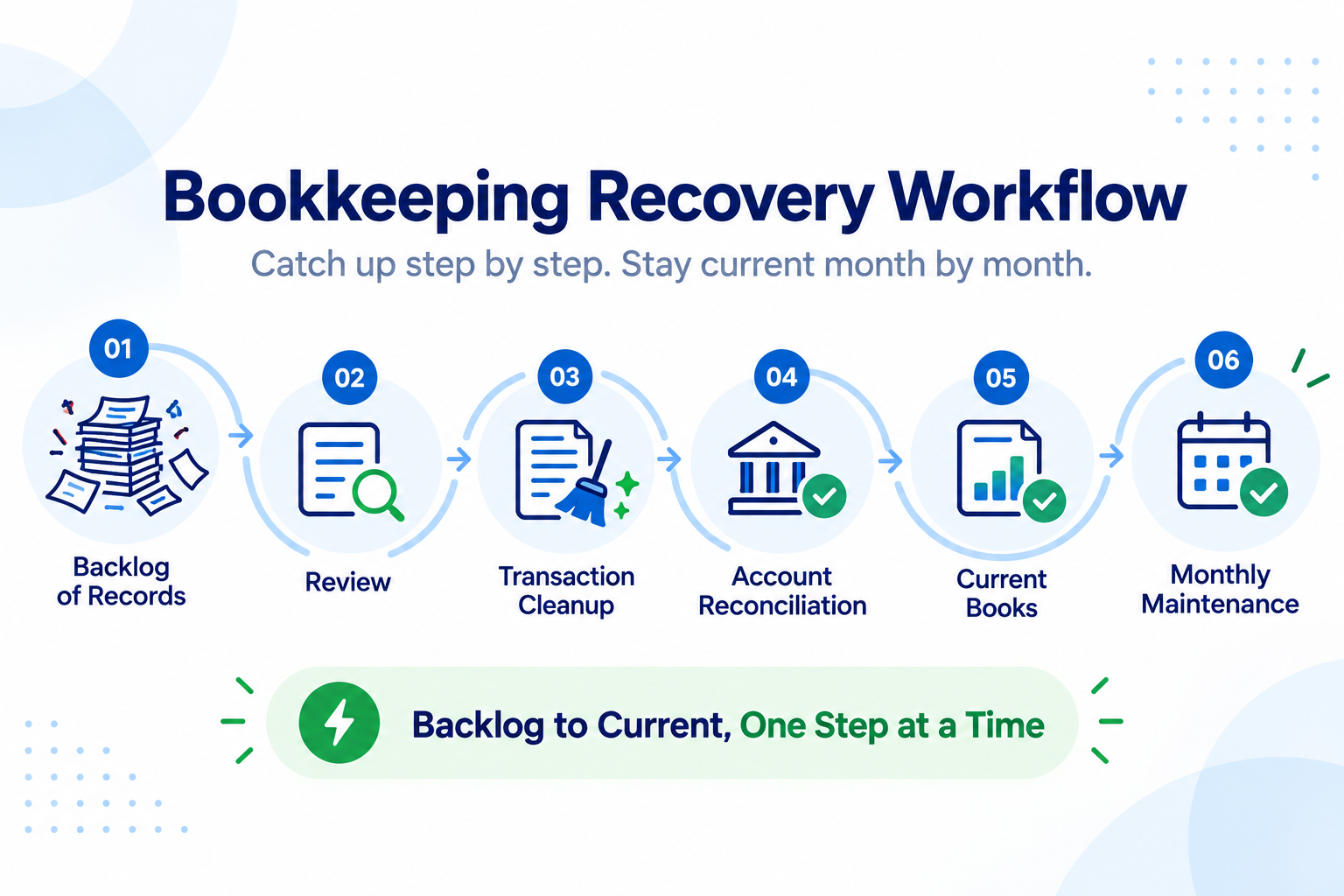
A typical bookkeeping cleanup process includes:
Step | What Happens |
Review records | Understand the current condition of the books |
Identify missing information | Find incomplete transactions and missing documents |
Reconcile accounts | Match accounting records with bank and credit card activity |
Organize transactions | Categorize income, expenses, and other activity correctly |
Update financial records | Bring the books current and prepare accurate reports |
Outsourced accounting teams typically work inside the business’s existing accounting systems, such as QuickBooks Online or Xero.
The process is designed to create clarity without disrupting daily operations.
What Documents Are Needed for a Bookkeeping Cleanup?
The more complete the information, the smoother the cleanup process becomes.
Businesses may need to provide:
- Bank statements
- Credit card statements
- Loan statements
- Payroll records
- Vendor invoices
- Customer payment records
- Previous accounting files
- Access to accounting software
The goal is to collect enough information to understand the complete financial picture.
How Long Does a Bookkeeping Cleanup Take?
The timeline depends on several factors:
- How many months are behind
- Number of transactions
- Number of accounts
- Quality of available records
- How quickly information can be provided
A business that is three months behind may require a different approach than one with several years of incomplete records.
A dedicated accounting team can often move faster than someone trying to complete cleanup work between other responsibilities.
The first goal is getting accurate.
The next goal is staying current.
How Do You Stop the Backlog From Coming Back?
Cleaning up old books solves the immediate problem.
But businesses also need a process that prevents the same situation from happening again.
After cleanup, many businesses move to ongoing bookkeeping support that includes:
- Monthly transaction review
- Regular account reconciliation
- Updated financial reports
- Consistent accounting schedules
The difference is simple:
Cleanup fixes the past.
Ongoing bookkeeping protects the future.
How SafeBooks Global Helps Businesses Clean Up Bookkeeping Backlogs
SafeBooks Global helps US businesses recover from delayed bookkeeping and build consistent accounting processes.
Our remote accounting support helps businesses with:
- Catch-up bookkeeping
- Transaction organization
- Account reconciliation
- Monthly bookkeeping support
- Financial reporting preparation
The goal is to help businesses move from outdated records to reliable financial information.
Learn more about our business bookkeeping services.
Need Help Getting Your Books Current Again?
A bookkeeping backlog can feel overwhelming from the inside.
But for an experienced accounting team, it is a structured process with a clear path forward.
Once the records are clean, businesses gain something that is easy to underestimate:
Confidence in their numbers.
SafeBooks helps US businesses clean up financial records and maintain accurate books every month, so owners can focus on running and growing their business.
Connect with SafeBooks Global through our contact page.