
A SaaS founder once celebrated their biggest month ever after more than $180,000 hit the bank in January.
Then the accounting review showed a different picture.
Much of that cash came from annual subscriptions paid upfront. The company collected the money in January, but those customers were paying for twelve months of software.
The bank account had a record month. January revenue did not.
This is a common SaaS accounting issue. Stripe shows cash collected. Revenue reflects what the business actually earned during the period.
For CPA firms supporting SaaS clients, the real challenge is not explaining that difference once. It is keeping revenue recognition and monthly books accurate as subscription activity grows.
Key Takeaway
A Stripe payout shows the cash collected from customers, not necessarily the revenue earned during that period. SaaS businesses need structured bookkeeping to properly track subscriptions, upfront payments, refunds, fees, and other adjustments.
Why Isn’t the Stripe Payout the Same as Revenue?
The simple answer:
Because cash received and revenue earned represent different things.
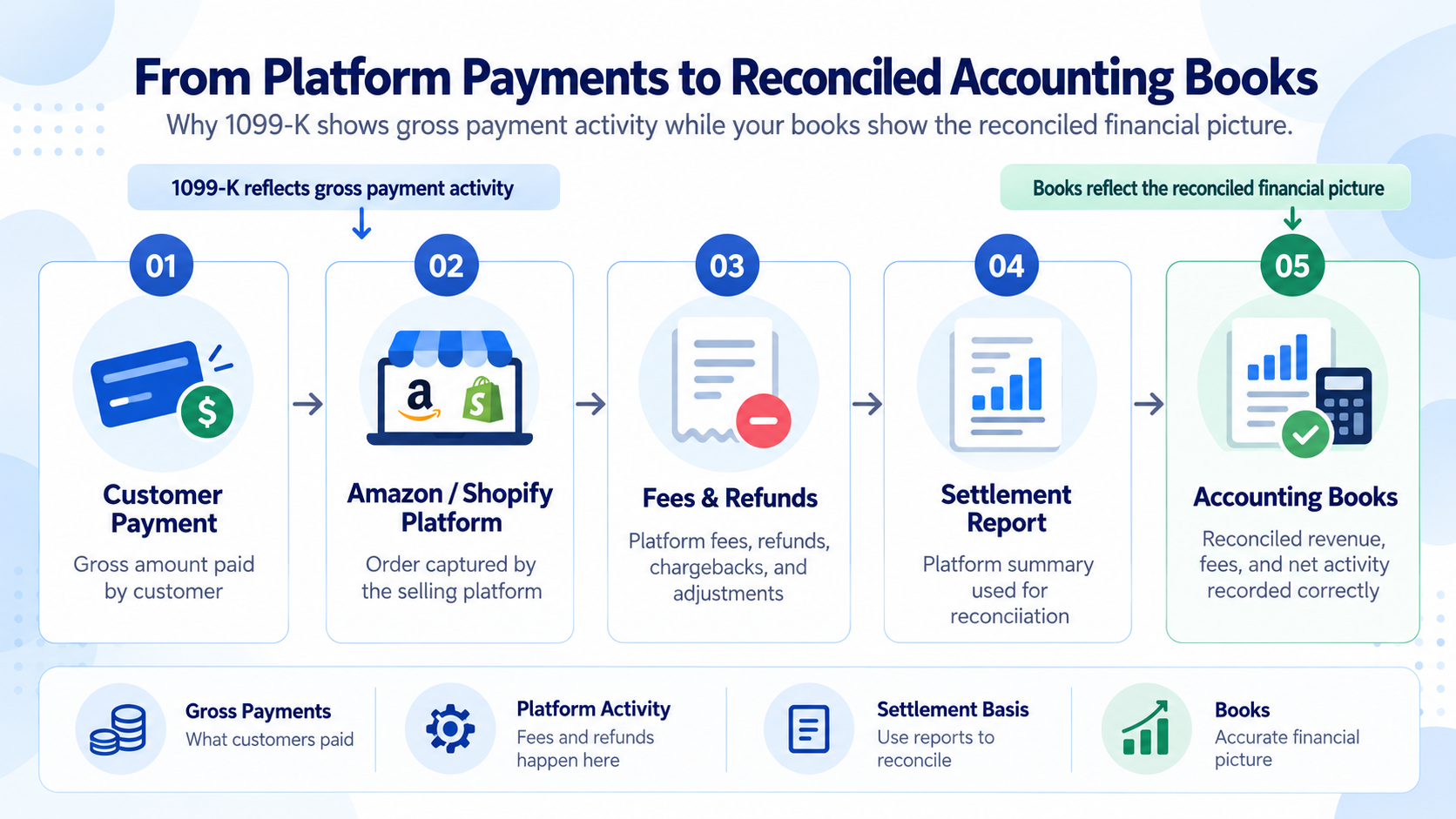
A Stripe payout shows the money that reached the business after payment processing activity.
Revenue reflects the value of services provided during a specific period.
For SaaS companies, this difference becomes important because many customers pay before the company delivers the full service.
For example:
A customer purchases a yearly SaaS plan for $12,000.
The company receives the full payment today.
But the customer receives access to the software for the next 12 months.
The cash arrives immediately.
The revenue is earned over time.
A $12,000 Annual Subscription Example
A simple example:
Month | Cash Received | Revenue Earned |
January | $12,000 | $1,000 |
February | $0 | $1,000 |
March | $0 | $1,000 |
April to December | $0 | $9,000 |
Total | $12,000 | $12,000 |
The company collected the cash in January.
But the revenue is recognized across the period where the software service is provided.
This difference helps explain why a Stripe deposit and monthly revenue report may not match.
What Else Makes Stripe Numbers Different?
Annual subscriptions are only one part of the challenge.
SaaS companies also deal with:
Payment Processing Fees
A customer may pay $10,000 through Stripe.
After processing fees:
- Customer payment: $10,000
- Stripe fees: $300
- Bank deposit: $9,700
The deposit amount is lower, but the company’s revenue is not automatically $9,700.
The fee is a separate business expense.
Refunds and Chargebacks
SaaS businesses regularly experience:
- Customer cancellations
- Refund requests
- Payment disputes
- Failed payments
These adjustments may happen after the original payment.
Without proper tracking, the numbers can become difficult to explain.
Subscription Changes
SaaS customers rarely stay the same forever.
They may:
- Upgrade plans
- Downgrade subscriptions
- Add users
- Cancel accounts
- Change billing cycles
Each change affects financial reporting.
Why Does This Matter to SaaS Founders?
The difference between cash and revenue affects important business decisions.
A founder looking only at Stripe deposits may believe:
- Revenue is growing faster than it is
- More hiring is immediately possible
- Spending can increase
But financial decisions require a clearer picture.
Founders need to understand:
- Actual monthly revenue
- Subscription performance
- Customer trends
- Cash position
- Business growth
Accurate books help founders make decisions based on the business reality, not just the money that recently arrived.
Why Do SaaS Books Fall Apart Before a Fundraise?
Many SaaS companies operate successfully for years before investors ask for detailed financial information.
Then due diligence begins.
Investors may request:
- Monthly financial statements
- Revenue trends
- Subscription metrics
- Customer information
- Historical reporting
This is where inconsistent bookkeeping becomes a problem.
A CPA firm may suddenly need to rebuild months of activity:
- Matching Stripe transactions
- Reviewing subscription payments
- Cleaning revenue records
- Explaining differences
The issue is not that the business lacks growth.
The issue is that the financial records were not prepared for the level of review required.
Why SaaS Bookkeeping Becomes Time-Consuming for CPA Firms
SaaS clients often grow faster than their accounting processes.
A company with a few customers may have simple bookkeeping.
A growing SaaS company may have:
- Hundreds of subscription payments
- Multiple pricing plans
- Monthly renewals
- Annual contracts
- Payment processors
- Refund activity
For CPA firms, the challenge is maintaining accurate monthly records while also serving more strategic client needs.
The bookkeeping work increases with every new customer.
Without consistent processes, firms can spend valuable hours fixing historical issues instead of advising founders.
What Should Monthly SaaS Bookkeeping Look Like?
Strong SaaS bookkeeping does not require complicated processes.
It requires consistency.
A reliable monthly workflow should include:
- Reviewing Stripe activity
- Recording payment processing fees
- Tracking subscription activity
- Maintaining accurate revenue reporting
- Reviewing refunds and adjustments
- Preparing clear financial statements
The goal is simple:
When a founder asks, “How are we really performing?”
The financial reports should provide a clear answer.
How Can CPA Firms Support SaaS Clients Without Stretching Their Team?
SaaS clients need more than tax preparation.
They need accurate monthly financial information that helps them operate and grow.
CPA firms should focus their internal time on:
- Client conversations
- Financial review
- Advisory services
- Fundraising support
Recurring bookkeeping tasks can be supported through a dedicated accounting team.
This includes:
- Stripe reconciliation
- Subscription bookkeeping
- Monthly close support
- Financial reporting preparation
The goal is not replacing the CPA relationship.
The goal is helping firms deliver better service while maintaining capacity as their SaaS client base grows.
How SafeBooks Global Supports SaaS Accounting Workflows
SafeBooks Global helps US CPA firms manage recurring bookkeeping requirements for SaaS and technology clients.
Our support helps firms handle:
- Subscription bookkeeping workflows
- Payment reconciliation
- Monthly accounting operations
- Financial reporting preparation
By managing recurring accounting tasks, SafeBooks Global helps CPA firms spend more time advising clients and less time managing transaction-level work.
Learn more about our accounting firm support services.
For businesses looking for bookkeeping support, explore our business bookkeeping services.
Need Cleaner Books for Growing SaaS Clients?
Cash tells a SaaS founder what arrived.
Revenue tells them what the business actually earned.
The firms SaaS clients trust are the ones that make that difference clear every month, not only when an investor asks.
SafeBooks Global supports CPA firms with dedicated accounting support for recurring SaaS bookkeeping and reconciliation needs.
Connect with SafeBooks Global through our contact page.