What Can Be Delegated and How to Maintain Quality
Audit season puts pressure on every level of an accounting firm.
Senior accountants and managers often spend hours rolling forward workpapers, organizing client documents, preparing schedules, tracking requests, and completing routine testing. These tasks are necessary, but they can take attention away from higher-value work such as client communication, risk assessment, review, and final engagement decisions.
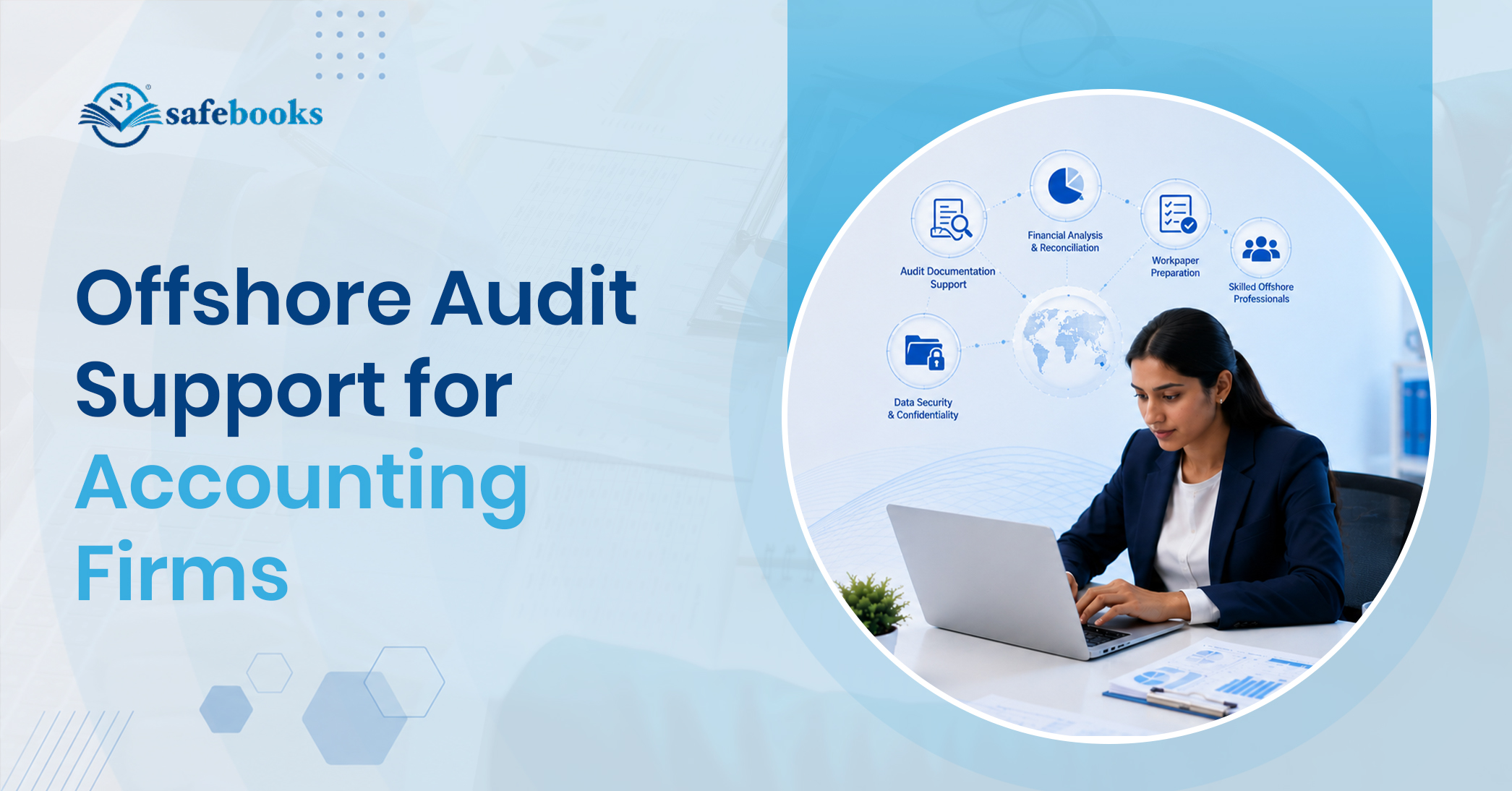
Offshore audit support gives firms another way to manage this workload. A trained remote team can handle structured audit-support activities while the CPA firm continues to control the engagement, review the work, and make all professional judgments.
The result is not less oversight. It is better use of the firm’s experienced people.
Key Takeaway
Accounting firms can delegate repeatable audit-support tasks such as workpaper preparation, trial balance mapping, PBC tracking, lead schedules, tie-outs, confirmation tracking, sample preparation, and routine testing.
The CPA firm should continue to control planning, risk assessment, materiality, significant judgments, exception review, final conclusions, and report issuance.
When the workflow is clearly defined, offshore audit support can help firms increase capacity, reduce bottlenecks, and complete engagements more efficiently without giving up control.
Why Accounting Firms Use Offshore Audit Support
Most firms do not consider offshore audit support because they want to replace their onshore team.
They consider it because their experienced staff are spending too much time on work that can be completed under a structured process.
A reliable offshore audit team can help firms:
- Manage peak-season workloads
- Reduce pressure on seniors and managers
- Improve turnaround on workpapers
- Keep PBC requests and open items organized
- Create more consistent audit documentation
- Add capacity without rushing local hiring
This allows the onshore team to spend more time reviewing work, communicating with clients, resolving exceptions, and managing engagement risk.
What Audit Work Can Be Delegated Offshore?
The best tasks to delegate are those that follow a clear process and can be reviewed against a defined standard.
Audit Area | How an Offshore Team Can Help | What the CPA Firm Retains |
Workpaper preparation | Roll forward files and update schedules | Final review and approval |
Trial balance support | Import, map, and organize accounts | Mapping decisions and adjustments |
PBC management | Prepare lists and track outstanding items | Client escalation and resolution |
Lead schedules | Prepare and update supporting schedules | Review of completeness and accuracy |
Confirmation tracking | Monitor requests and responses | Control over the process and conclusions |
Audit testing | Perform defined procedures and document results | Procedure design and exception evaluation |
Financial statement tie-outs | Trace figures, references, and disclosures | Review of unresolved differences |
Open-item tracking | Maintain status and follow-up lists | Final resolution and engagement decisions |
Offshore teams may also support fixed asset rollforwards, bank and debt schedules, sample population preparation, document indexing, footing, cross-footing, and review-note clearance.
The CPA firm remains responsible for the engagement and the audit opinion.
What Should Stay With the CPA Firm?
Offshore audit support should strengthen the engagement team, not replace professional oversight.
The CPA firm should continue to manage engagement acceptance, independence, materiality, risk assessment, audit planning, sampling decisions, significant exceptions, technical consultations, final review, client communication, and report issuance.
A simple way to define the relationship is:
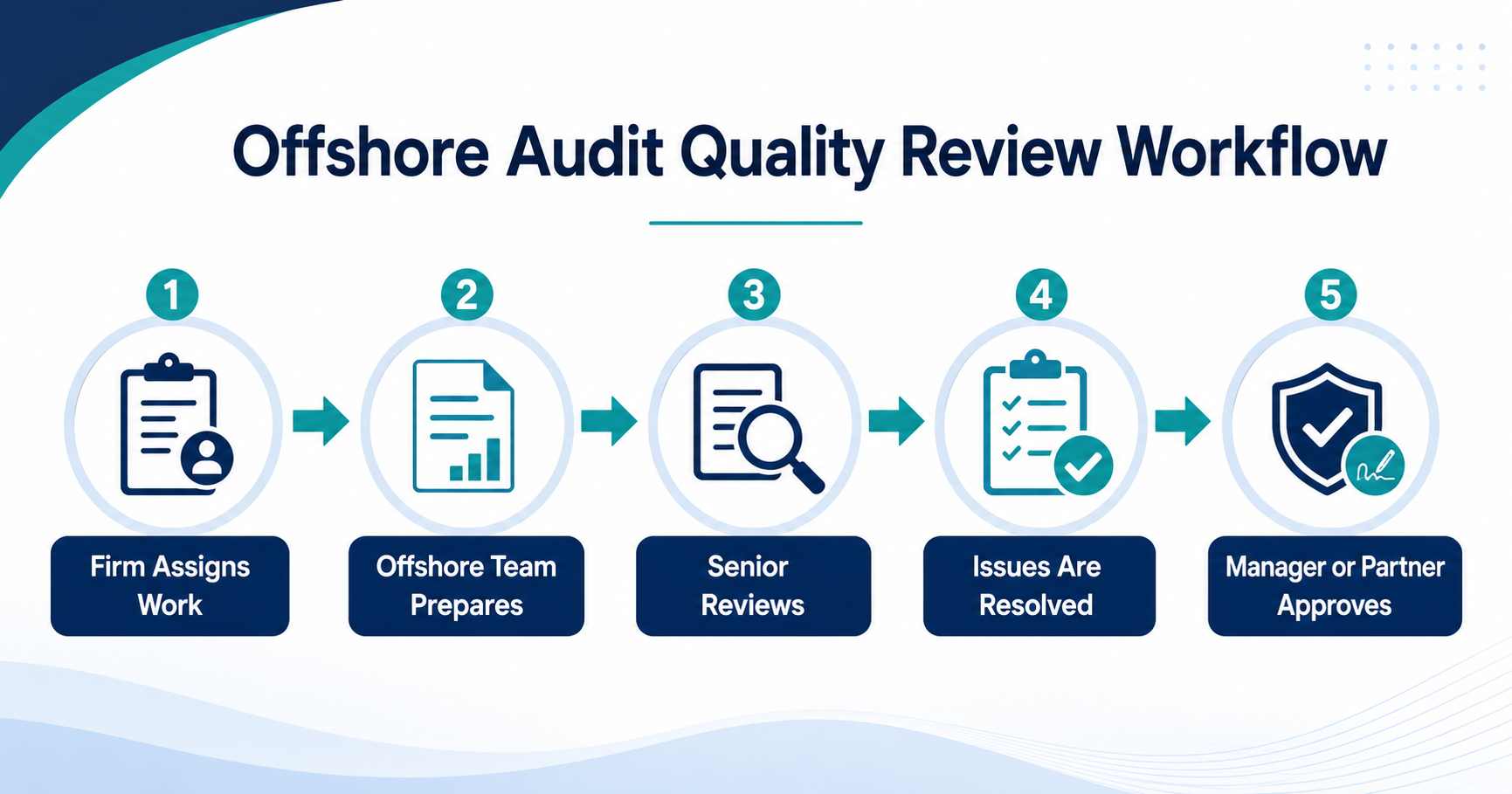
The offshore team prepares and documents the work. The CPA firm directs, reviews, evaluates, and approves it.
This clear division helps firms use offshore support without losing control of the engagement.
How to Maintain Quality With an Offshore Audit Team
Quality depends less on where the work is completed and more on how the process is managed.
Start With Clear Instructions
Each task should have a clear objective, expected output, deadline, supporting documents, and reviewer.
For example, asking someone to “complete expense testing” is not enough. The preparer should know which population to use, what documents to inspect, how to record exceptions, and when to escalate an issue.
Clear instructions reduce rework and help the offshore team produce review-ready files.
Give the Team Client Context
A checklist alone does not explain what makes a client unusual.
The offshore team should understand the client’s industry, major changes during the year, important prior-year issues, known control concerns, and areas requiring extra attention.
This context helps the preparer identify unusual items instead of simply completing steps.
Use Consistent Templates
Standardized workpapers, naming conventions, checklists, and review-note formats make work easier to prepare and easier to review.
A completed sample file can also show the offshore team what the firm expects. It should be used as a quality reference, not as a template for copying prior-year conclusions.
Keep Review Responsibility Clear
Every workpaper should show who prepared it, who reviewed it, when the review occurred, and how review notes were resolved.
Routine work may be reviewed by a senior. More complex work may require manager or partner involvement.
The important point is that review responsibility remains visible and controlled by the CPA firm.
Discuss Repeated Review Notes
When the same issue appears across several files, the solution should not be to keep correcting it.
The onshore and offshore teams should discuss why the issue occurred, whether the instructions were unclear, whether more training is needed, or whether the template should be improved.
These short calibration sessions help the offshore team understand what the firm considers acceptable work.
Measure Review-Ready Output
Completion alone is not the best measure of performance.
Firms should look at:
- First-pass acceptance
- Review notes per workpaper
- Rework time
- Missing evidence
- Open items
- On-time delivery
These measures show whether offshore support is reducing the workload of the onshore team or simply moving tasks between people.
How Offshore Audit Support Helps During Peak Season
Peak season often creates a capacity problem before it creates a technical problem.
The firm may have enough experienced people to make decisions, review files, and communicate with clients, but not enough time to complete every supporting task internally.
Offshore audit support helps by creating additional execution capacity around the onshore team.
A dedicated team can support several engagements, follow the firm’s templates, track recurring work, and become familiar with its review expectations. This is more useful than adding temporary help that must be trained again for every engagement.
It also gives managers better visibility into who is completing the work, which files are pending, and where issues need attention.
Protecting Client Information
Audit files may contain sensitive financial, payroll, banking, contract, and personal information.
Before assigning work, firms should verify how the offshore provider manages system access, devices, file storage, downloads, confidentiality, incident reporting, and offboarding.
SafeBooks Global Pvt. Ltd. is SOC 2 Type II certified across all five Trust Services Criteria:
- Security
- Availability
- Processing Integrity
- Confidentiality
- Privacy
The SOC 2 report is available to customers under NDA.
This independent assurance supports the controls SafeBooks uses to protect client information. The CPA firm should still maintain its own access, review, and quality procedures.
Expert Insight
“The best offshore audit-support relationships begin with clear ownership. The offshore team should understand what it is expected to prepare, while the CPA firm remains fully responsible for supervision, review, judgment, and final approval.“
Anshul Agrawal,
Accounts Director, CA, SafeBooks Global
How SafeBooks Supports CPA and Accounting Firms
SafeBooks provides offshore audit support for U.S. CPA firms and accounting practices that need more capacity without giving up control over quality.
Our professionals work within your audit software, templates, engagement timelines, and review process. Support can include workpaper rollforwards, lead schedules, PBC tracking, trial balance preparation, routine testing, tie-outs, open-item tracking, and review-note clearance.
SafeBooks does not replace your engagement team. We support it.
Your firm continues to control planning, risk assessment, client communication, review, significant judgments, final conclusions, and report issuance.
Our goal is to help your senior accountants and managers spend less time preparing routine work and more time reviewing, advising, and completing engagements.
Firms preparing for offshore delivery can also review our guide to setting up remote accounting workflows and learn how SafeBooks protects client financial data.
Final Takeaway
Offshore audit support works best when it gives the CPA firm more capacity without weakening control.
Structured audit preparation, documentation, tracking, and testing can be delegated to a trained offshore team. Professional judgment, risk assessment, supervision, final review, and the audit opinion remain with the CPA firm.
With clear processes and a reliable support team, firms can manage more work, reduce pressure on senior staff, and complete audit engagements with greater consistency.
Need additional audit capacity for your firm?
Contact SafeBooks Global to discuss a controlled offshore audit-support pilot based on your current workload, software, and review process.