Your Clients Don’t Need More Financial Reports. They Need Earlier Warning Signs.
Most business owners do not wake up wanting another financial report.
They want to avoid the surprise that the report reveals too late.
- A surprise tax bill.
- A cash gap before payroll.
- A margin problem that has been growing for months.
- A financing delay because the books are not clean.
- A month-end close that arrives after the decision has already been made.
Financial reports still matter. But reports are only useful when they help clients act earlier. If the numbers arrive late, incomplete, or without context, they become a record of what went wrong instead of a signal for what needs attention.
That is why bookkeeping is becoming more strategic. It is not only about recording transactions. It is about creating the financial visibility that helps business owners make decisions before problems become expensive.
Reports Are Not Enough When They Arrive Too Late
A profit and loss statement, balance sheet, or cash flow report can be technically accurate and still arrive too late to be useful.
If a client receives financials after payroll pressure, tax deadlines, inventory decisions, or financing conversations have already created stress, the report has limited decision value.
The month-end close exists to review, reconcile, adjust, and finalize financial activity so the numbers reflect the company’s actual position. But when the close is delayed, business owners lose visibility into performance, cash flow, and decision timing. (venasolutions.com)
A report that explains the problem after the damage is done is not insight. It is only history.
Clients do not need more reports sitting in their inbox. They need earlier warning signs that tell them what needs attention now.
The Surprises Clients Actually Want to Avoid
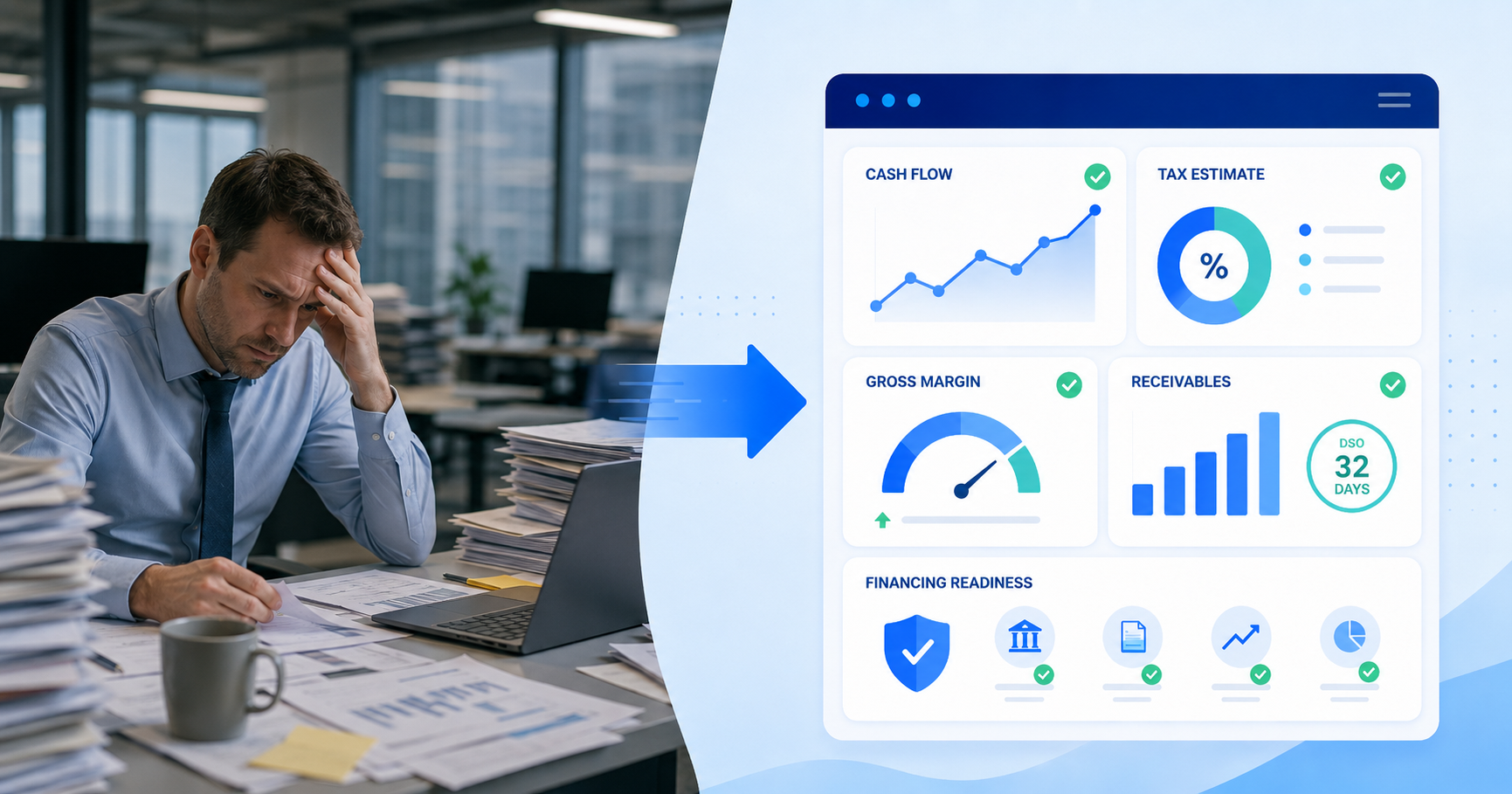
The most painful financial problems usually do not appear suddenly. They build quietly because the books are not current, reconciliations are delayed, or reports are not reviewed in time.
A tax bill becomes a surprise when liabilities are not tracked throughout the year. A cash flow problem becomes urgent when receivables, payables, and upcoming obligations are not visible together. Margin erosion becomes hard to correct when rising costs are buried inside late reporting.
Messy books before financing can be even more damaging. Lenders, investors, and buyers expect clean, consistent financial records. When revenue, expenses, debt, payroll, or bank balances are unclear, the financing process slows down and credibility weakens.
This is why timely financial data matters. Late or inaccurate reporting can lead to delayed decisions, missed trends, cash flow mismanagement, and weaker stakeholder confidence.
Business owners do not want to be told what went wrong after the fact. They want enough warning to make a better decision.
Bookkeeping Is Becoming Strategic
Bookkeeping is often described as clerical work. But when it is done well, it becomes a decision-support function.
Clean bookkeeping supports tax readiness, cash flow visibility, financing preparation, margin tracking, payroll planning, and management reporting. It helps business owners see what is changing before it becomes a crisis.
Strategic bookkeeping does not only tell a client what happened. It helps them see what is about to become a problem.
This is also why Client Advisory Services continue to grow across the accounting profession. CPA.com and AICPA PCPS reported that CAS practices in their 2024 benchmark survey saw 17% median growth and projected strong continued growth over the next three years. (cpa.com)
But advisory depends on the quality of the accounting foundation underneath it. A firm cannot advise confidently when books are outdated, reconciliations are incomplete, or reports need constant correction.
SafeBooks supports this foundation through bookkeeping and accounting support and back-office support for accounting firms, helping firms keep recurring accounting work organized, timely, and review-ready.
What Earlier Warning Signs Look Like
Earlier warning signs are not complicated. They are practical signals that help owners act before the issue grows.
A cash balance starts dropping before payroll week.
Sales are rising, but margins are shrinking.
Unpaid invoices are aging faster than usual.
Tax liability is building before filing season.
Inventory purchases are increasing faster than revenue.
Monthly close is consistently slipping.
Loan application records are not ready when financing is needed.
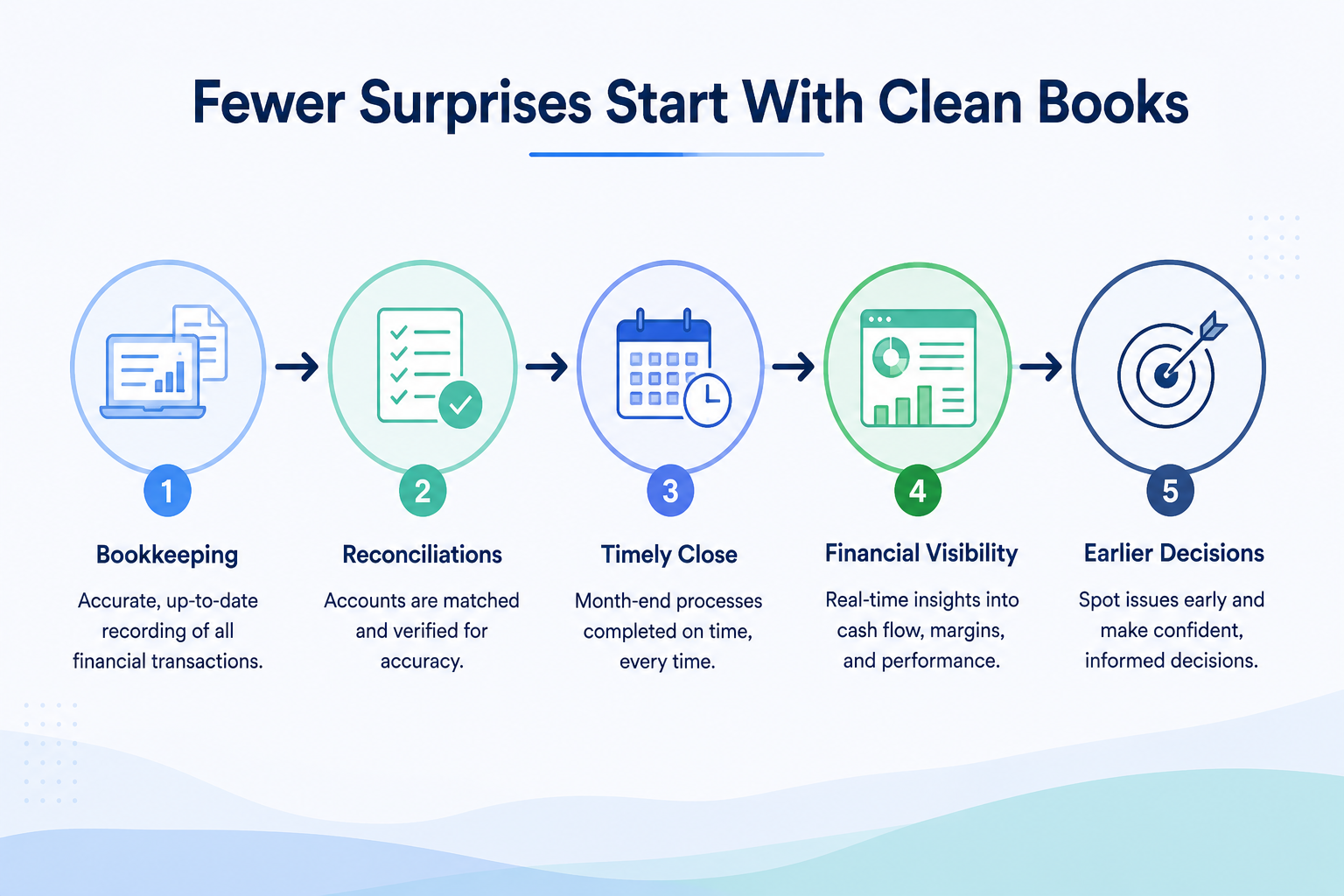
These signals only become visible when books are current, accounts are reconciled, and reports are prepared with enough time to act.
That is the difference between bookkeeping as data entry and bookkeeping as financial visibility.
CPA Firms Need a Cleaner Reporting Rhythm
For CPA firms, the opportunity is clear. Clients do not only need year-end cleanup or monthly report delivery. They need a reliable reporting rhythm that reduces surprises.
That requires consistent bookkeeping, timely reconciliations, organized document follow-up, and clear review standards. It also requires communication that explains what changed, why it matters, and what needs attention.
Automation can help with parts of this process, but it cannot replace accounting discipline. If client documents are late, reconciliations are inconsistent, or close steps are unclear, software will not solve the real problem.
The firms that create the most client value are the ones that combine strong process, reliable staffing, and timely reporting.
SafeBooks has also discussed the value of structured remote accounting workflows for firms that want to improve consistency across bookkeeping, reconciliations, and close support.
Where Remote Accounting Teams Fit In
Remote accounting teams can help CPA firms and businesses maintain the recurring work needed for earlier warning signs.
When structured properly, they can support bookkeeping, reconciliations, reporting packs, document follow-up, AR/AP tracking, and close preparation. This gives business owners and CPA partners cleaner information to review and more time to act.
But remote support only works when the process is clear. The team needs defined workflows, communication standards, review expectations, and timely access to documents.
A structured remote team does not simply “do the books.” It helps keep the financial system current enough for better decisions.
Expert Insight
“Clients rarely ask for more reports. They ask for clarity before the issue becomes expensive. When bookkeeping, reconciliations, and reporting are handled on time, business owners can see tax exposure, cash pressure, margin movement, and financing gaps earlier. That is where bookkeeping becomes strategic.”
Anshul Agrawal
Accounts Director, CA, SafeBooks
Better Bookkeeping Means Fewer Surprises
Business owners do not need more financial statements if those statements arrive too late to change the outcome.
They need earlier warning signs.
They need to know when cash is getting tight, when margins are slipping, when taxes are building, when financing records are not ready, and when the close process is falling behind.
That is why bookkeeping should not be treated as clerical work. It is the operating layer that supports better decisions.
For CPA firms and businesses that want cleaner books, stronger reporting, and fewer financial surprises, SafeBooks helps build structured remote accounting teams with reliable workflows and review-ready output. To discuss how this could support your firm, contact SafeBooks.