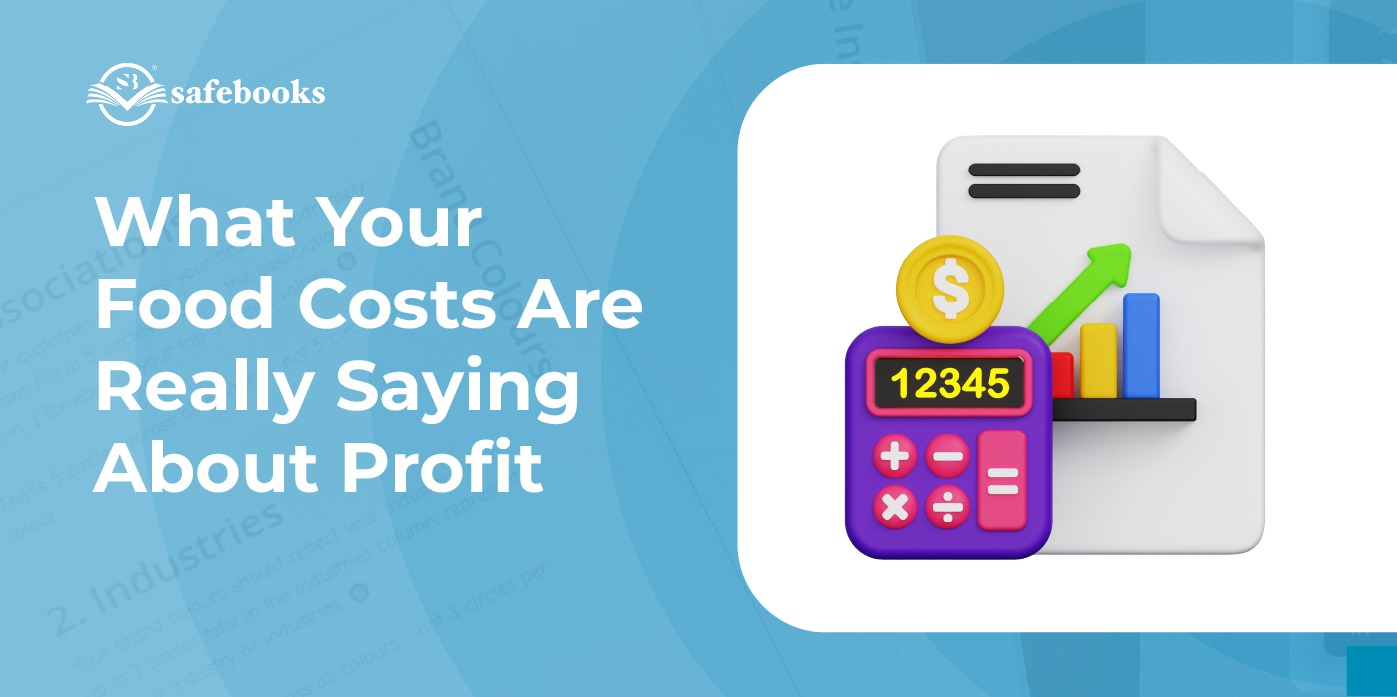
If you only look at revenue, you miss the bigger story. Profit in a restaurant depends heavily on knowing your food costs and where your margins actually stand.
Many restaurants generate strong sales but still struggle financially because food costs, waste, and poor tracking quietly eat into profits. Without structured visibility, the business becomes a black box of expenses instead of a controlled profit system.
What Food Cost Really Means in Restaurant Accounting
Food cost is not what you purchase. It is what you use to generate revenue.
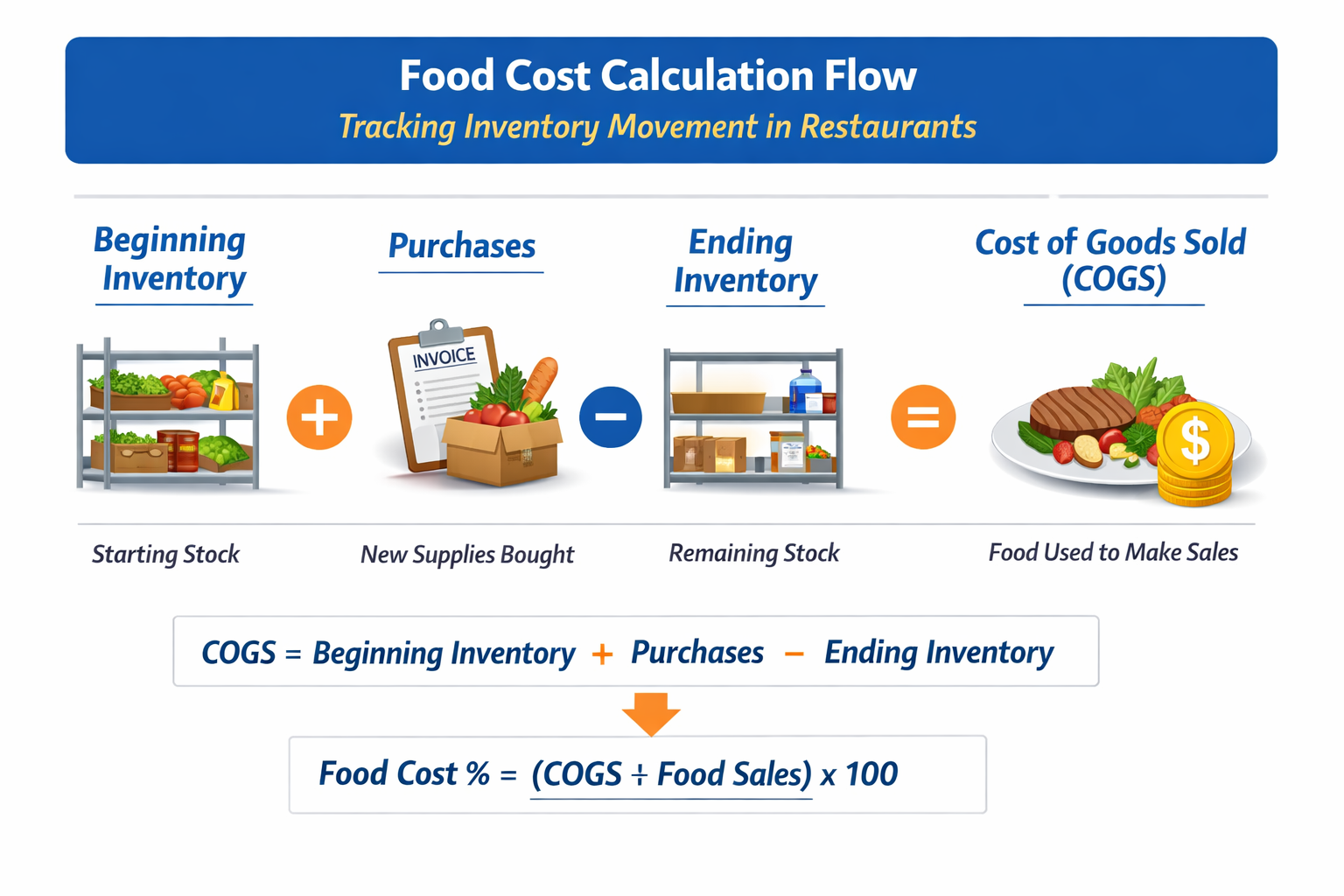
In accounting terms, this is captured through Cost of Goods Sold (COGS):
Beginning Inventory
- Purchases
– Ending Inventory
= Cost of Goods Sold
This distinction matters. Ordering large quantities does not immediately impact profitability. Consumption does.
Food cost percentage is calculated as:
(COGS ÷ Food Sales) × 100
Most restaurants operate within a benchmark of 25% to 35%. If this number increases without a pricing adjustment, margins shrink quickly.
Cost of Goods Sold vs Operating Expenses
Understanding the difference between direct and indirect costs is critical for accurate reporting.
Cost of Goods Sold (COGS)
- Ingredients
- Raw materials
- Packaging for delivery
Operating Expenses
- Rent
- Utilities
- Marketing
- Software tools
- Administrative salaries
COGS fluctuates with sales volume, while operating expenses remain relatively stable. Mixing these categories leads to incorrect margin analysis and poor decision-making.
Restaurants that build structured accounting systems, similar to the remote accounting workflow setup guide, avoid these classification errors early.
Prime Cost and Why It Matters
Prime cost is the most important financial metric in restaurant operations.
Prime Cost = COGS + Labor Cost
This represents the two largest controllable expenses in the business.
A healthy prime cost typically falls between 55% and 65% of revenue. When it crosses 70%, profitability becomes difficult to sustain.
Tracking prime cost regularly allows owners to identify whether the issue lies in food cost, labor efficiency, or both.
Tracking Menu Profitability
Not every dish contributes equally to profit. Some high-selling items may actually generate low margins.
Menu profitability is measured using:
- Food cost per dish
- Selling price
- Contribution margin
- Sales volume
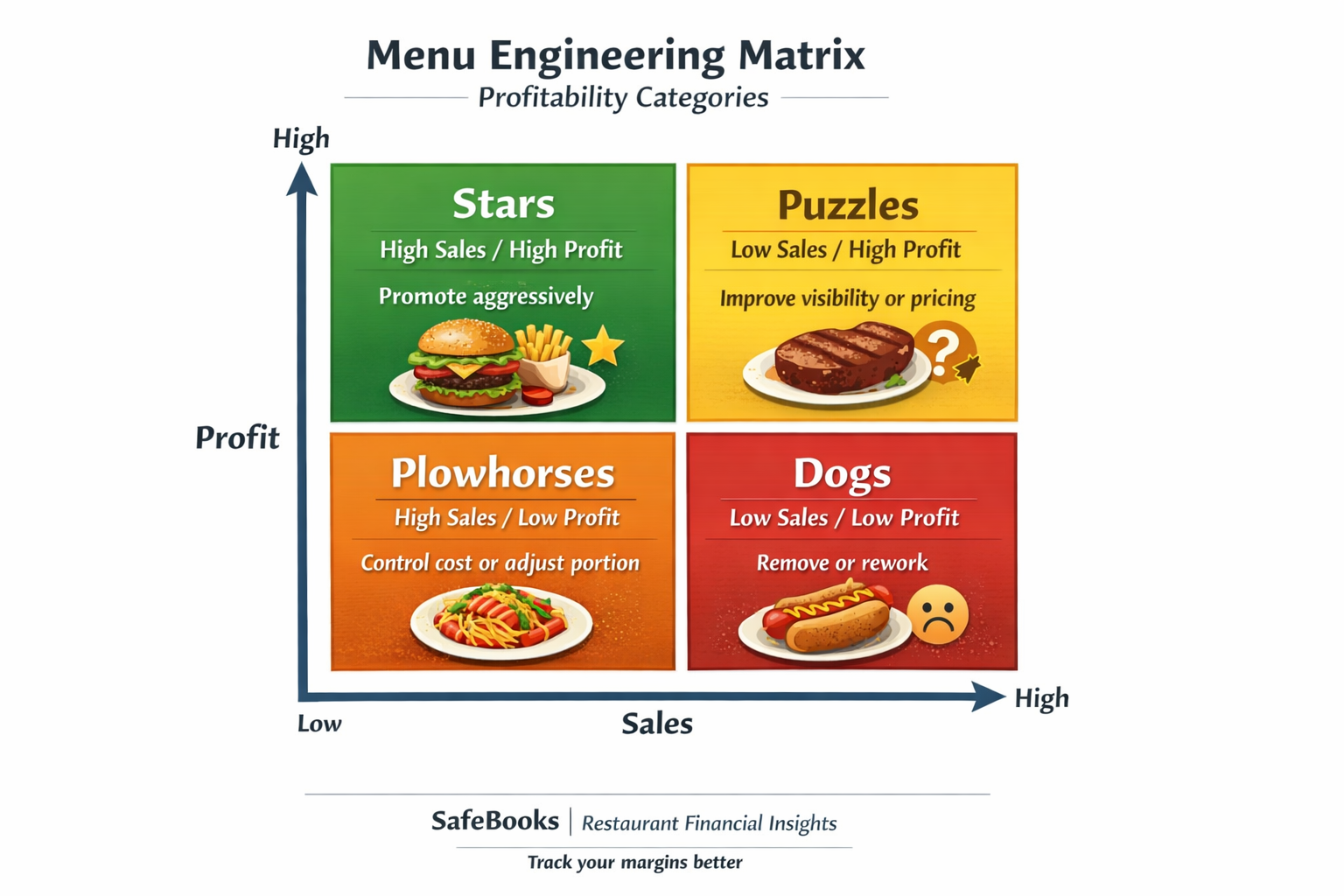
Restaurants often use a menu engineering framework:
- High margin + high sales
- Low margin + high sales
- High margin + low sales
- Low margin + low sales
This helps identify which items to promote, adjust, or remove.
Common Mistakes in Food Cost Reporting
Many restaurants lose money due to simple reporting errors:
- Using purchase data instead of actual consumption
- Skipping regular inventory counts
- Ignoring spoilage and wastage
- Not maintaining recipe-level costing
- No integration between POS and accounting systems
- Tracking food cost only monthly instead of weekly
These gaps create blind spots where losses go unnoticed.
How Regular Reporting Helps Protect Margins
Food cost issues do not appear overnight. They build gradually.
Monthly reporting is often too late to act. By the time issues are identified, margins are already impacted.
Modern restaurants track key metrics weekly or even daily:
- COGS trends
- Inventory variance
- Menu-level profitability
- Prime cost movement
This shift from periodic reporting to continuous monitoring is similar to the approach explained in the continuous close remote accounting workflow, where financial visibility improves through consistent validation.
Technology plays a key role here. POS systems, inventory tools, and accounting platforms help automate tracking and reduce manual errors.
For restaurants handling sensitive financial data across multiple systems, following practices similar to the financial data protection framework helps maintain both accuracy and security.
Expert Insight
“Food cost tracking is not just an accounting exercise. It directly influences pricing decisions, purchasing strategy, and overall profitability. Restaurants that track margins consistently make faster and more confident operational decisions.“
Shivangi Agrawal, Managing Director (CA, CPA USA), SafeBooks
How SafeBooks Supports Restaurant Accounting
Restaurants need more than bookkeeping. They need structured financial visibility.
SafeBooks helps restaurants:
- Track accurate COGS through inventory reconciliation
- Integrate POS systems with accounting platforms
- Build structured reporting systems
- Monitor margins and profitability regularly
Explore specialized solutions for restaurant bookkeeping services and scalable support through back office accounting support.
If you want to understand where your margins stand today, you can connect via the SafeBooks contact page.