
Client Overview
A consulting firm generating approximately $2.5M in annual revenue had stable financial operations and regular tax filings. However, the business had never undergone a detailed review under the Tax Cuts and Jobs Act (TCJA).
While filings were completed each year, there was no structured review to ensure that all available deductions and provisions were being applied correctly.
The Hidden Problem in “Filed and Done” Tax Returns
At first glance, everything appeared compliant. Returns were filed, taxes were paid, and no major issues were flagged.
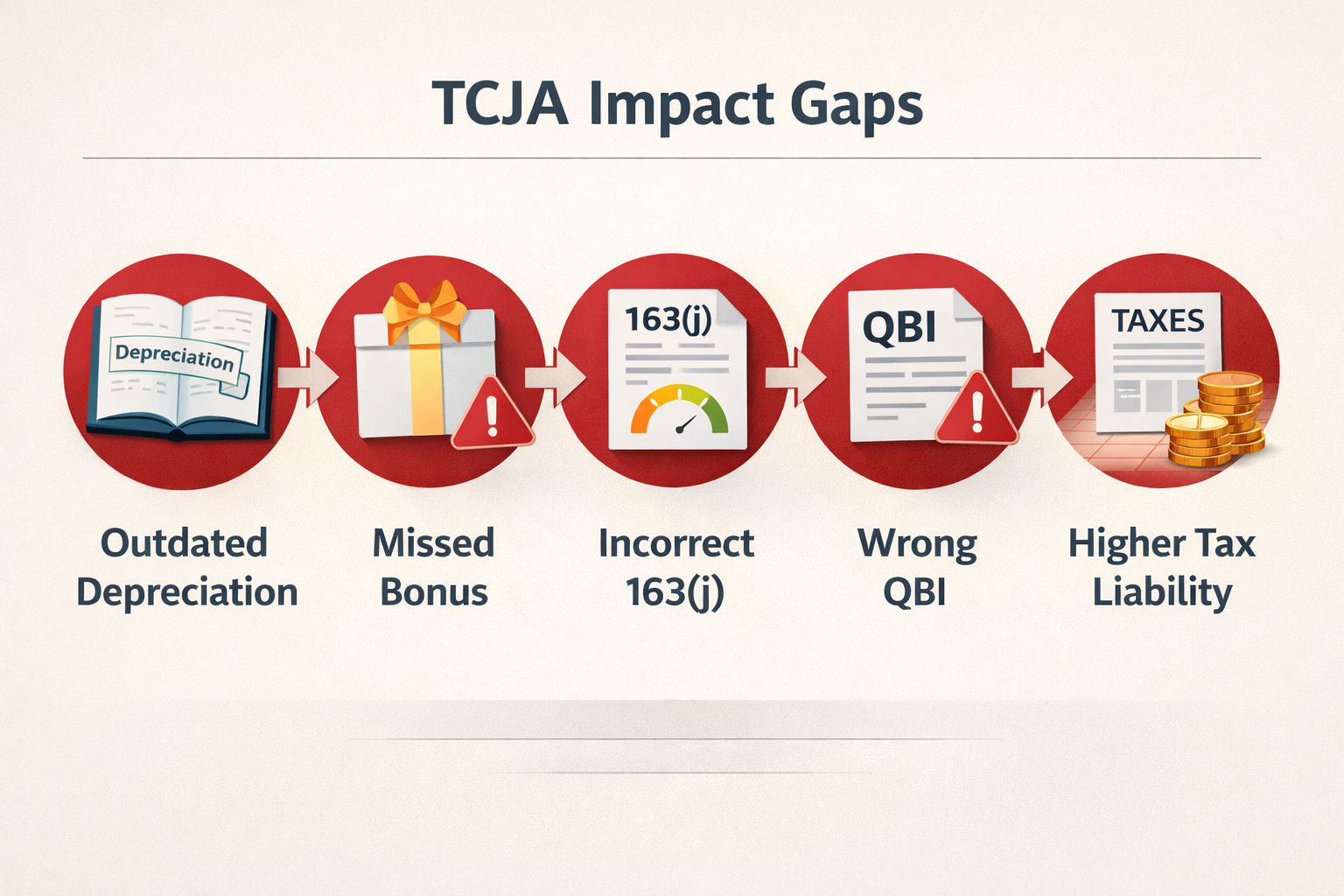
But a deeper review revealed multiple gaps:
- Depreciation schedules had not been updated
- Section 163(j) interest limitations were misapplied
- Bonus depreciation opportunities were not utilized
- Qualified Business Income (QBI) deduction was incorrectly calculated
These were not minor errors. They directly impacted the client’s tax liability.
This situation is more common than expected, especially when businesses do not revisit filings in light of regulatory updates like those discussed in this guide on IRS updates and tax changes.
Why TCJA Reviews Are Often Overlooked
Many businesses assume that once returns are filed, there is no need to revisit them unless an issue arises.
However, TCJA introduced complex provisions that require:
- Ongoing interpretation
- Correct application of aggregation rules
- Regular updates based on business changes
Without structured review processes, businesses often miss deductions that they are legally entitled to claim.
As explained in this guide on outsourcing accounting with a dedicated team, having specialized expertise ensures that such opportunities are not overlooked.
The SafeBooks Approach
SafeBooks conducted a detailed TCJA-focused review to identify gaps and correct prior filings.
1. Full TCJA Impact Assessment
The first step was reviewing the last three years of tax filings.
This included:
- Analyzing depreciation schedules
- Reviewing interest expense treatment
- Evaluating QBI calculations
- Identifying missed opportunities
This provided a clear picture of where corrections were needed.
2. Depreciation Correction and Bonus Application
Depreciation schedules were rebuilt to reflect accurate asset classification and timelines.
SafeBooks:
- Applied 100% bonus depreciation where eligible
- Corrected prior depreciation errors
- Ensured compliance with current tax treatment
This unlocked immediate tax savings.
3. Recomputing 163(j) Interest Limitations
Interest expense calculations were reassessed under Section 163(j).
This involved:
- Correcting limitations based on taxable income thresholds
- Adjusting prior misapplications
- Ensuring accurate carryforward treatment where applicable
4. Reconstructing QBI Calculations
The Qualified Business Income deduction was recalculated using proper aggregation rules.
SafeBooks ensured:
- Correct inclusion of eligible income
- Proper application of thresholds
- Alignment with current IRS guidelines
Businesses looking to understand how such adjustments impact financial reporting can refer to this guide on IRS deduction rules for accrued expenses.
5. Building a Repeatable Compliance System
Beyond corrections, SafeBooks created a structured TCJA checklist for future filings.
Firms evaluating similar long-term systems can refer to this guide on how to evaluate an offshore accounting partner to understand the importance of process-driven compliance.
The Outcome That Directly Reduced Tax Liability
The results of the TCJA review were immediate and measurable.
Key Results:
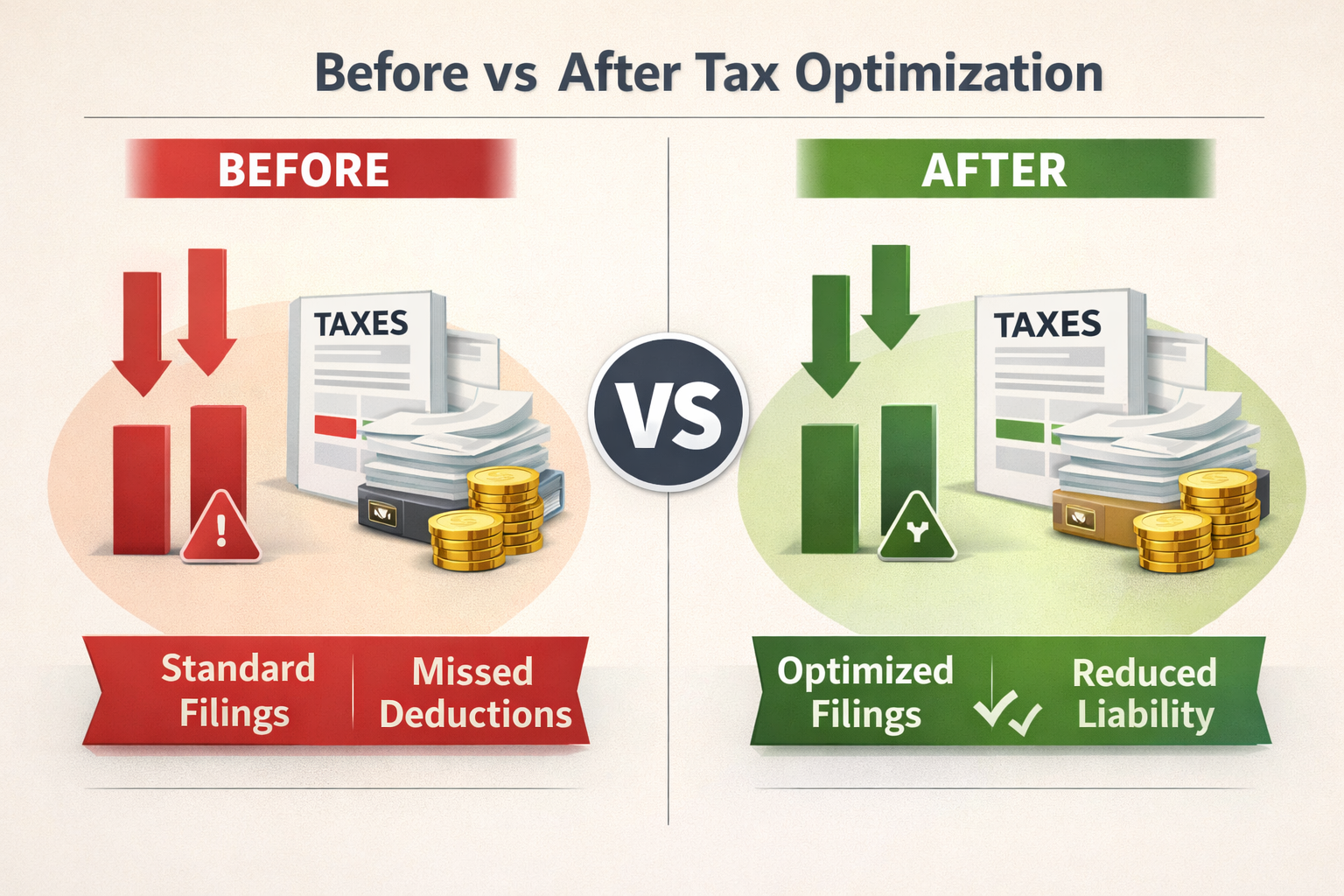
- $42,000 in missed deductions identified and claimed
- Amended returns filed successfully
- QBI deduction restored and applied correctly
- Reduced overall tax liability
More importantly, the business gained clarity on how its tax position was being calculated.
What This Means for Growing Businesses
Tax filings that appear correct may still be inefficient.
Without periodic reviews:
- Deductions may be missed
- Calculations may be outdated
- Tax liability may be higher than necessary
With structured TCJA reviews:
- Opportunities are identified proactively
- Compliance improves
- Tax efficiency increases
Before outsourcing or implementing tax review systems, it is helpful to understand key considerations outlined in this guide on questions to ask before hiring a remote accounting team.
Turning Tax Compliance Into Tax Optimization
Compliance ensures that filings are correct. Optimization ensures that they are efficient.
SafeBooks combines:
- Technical tax expertise
- Structured review processes
- Secure handling of financial data
You can also learn more about how financial data is managed securely in this article on data protection and compliance practices.
When a Review Changes the Entire Tax Outcome
The biggest shift for the client was not just recovering missed deductions. It was understanding that tax outcomes can be improved with the right systems in place.
Instead of treating filings as a final step, the business now treats them as an opportunity for optimization.
If your business has not undergone a structured tax review in recent years, there may be opportunities that are still untapped.
Start here: Contact SafeBooks