
R365 Labor Scheduling and Payroll Integration for a Fast Casual Franchise
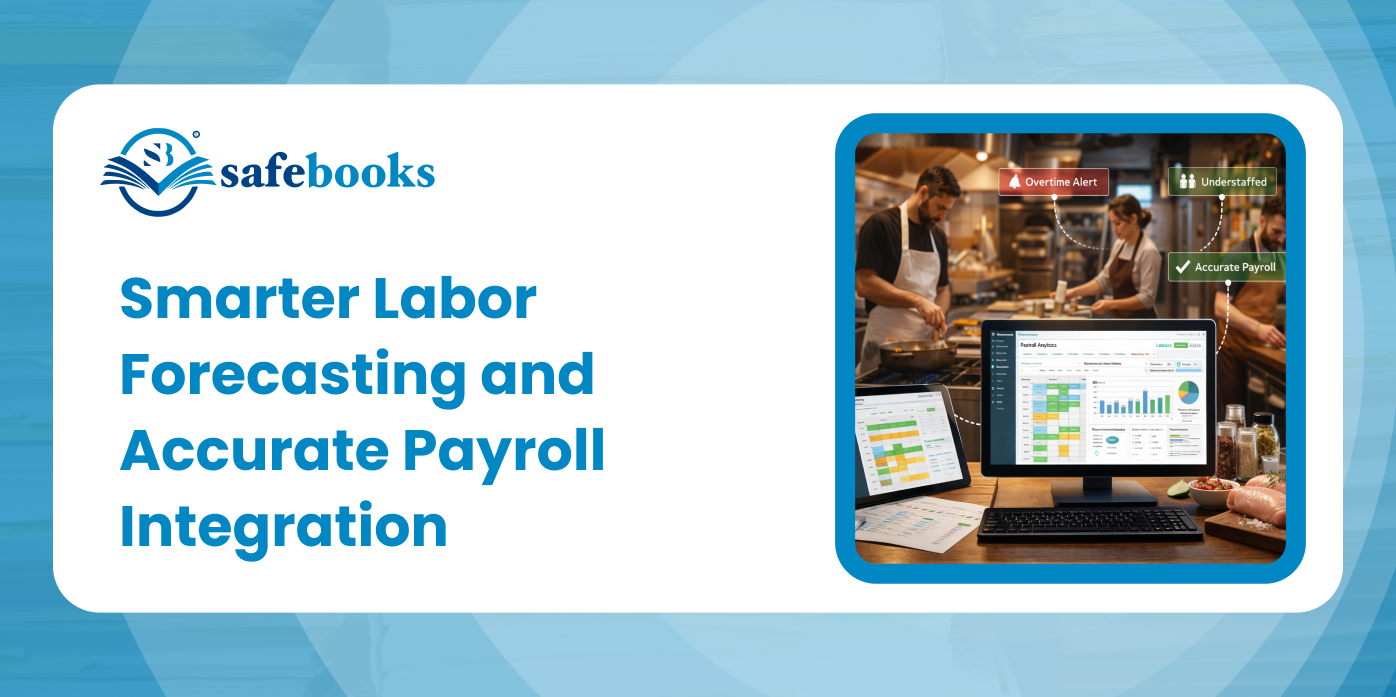
A fast casual franchise with 42 employees struggled with overtime costs, manual scheduling inefficiencies, and inconsistent payroll records. SafeBooks implemented Restaurant365 labor scheduling, forecasting, and ADP payroll integration to improve real-time visibility and operational control.
This project reflects SafeBooks system integration capabilities, similar to its work in AR and AP Software Integration and operational automation for growing businesses.
1. Client Overview
Industry: Fast casual franchise
Locations: 1 location with expansion plans
Employees: 42
Systems Before SafeBooks
- ADP for payroll
- Google Sheets for scheduling
- No real-time labor forecasting
- No centralized labor dashboard
Core Issue
Labor costs were rising, but managers lacked tools to monitor performance in real time. Overtime was discovered after payroll processing. Schedules were manually created, and payroll adjustments required frequent corrections.
This type of fragmented workflow often results from disconnected operational systems, a challenge discussed in Cloud vs On Prem Accounting for CPA Firms.
2. Challenges Before Implementation
Costly Overtime
Managers did not track labor hours against real-time sales data. Overtime thresholds were exceeded before corrective action could be taken.
Scheduling Inefficiencies
Weekly schedules were built manually in spreadsheets. Errors led to understaffed shifts or unnecessary overlap. Coverage gaps affected service levels.
Payroll Inconsistencies
Tips, break tracking, and shift differentials were not consistently recorded. This created payroll corrections and additional administrative workload.
3. SafeBooks Engagement
SafeBooks implemented Restaurant365 labor management with structured forecasting, alerts, and payroll integration.
Phase 1: R365 Labor Module Setup
SafeBooks connected POS sales data directly into R365 to enable labor forecasting tied to projected revenue.
Labor Framework Configuration
Component | Implementation |
POS Integration | Real-time sales feeding into labor forecasting |
Daypart Templates | Standard schedules for breakfast, lunch, and dinner |
Role Structuring | Clean job categories and permissions |
Labor Forecast Model | Target labor-to-sales ratios by shift |
Template schedules were built for each daypart so managers could quickly adjust staffing based on forecasted traffic. Role definitions were standardized to eliminate inconsistencies in pay and permissions.
This structured approach ensured that labor planning aligned with expected revenue instead of guesswork.
Phase 2: Real-Time Labor Controls and Alerts
After establishing the base configuration, SafeBooks implemented proactive controls.
Real Time Alert System
Alert Type | Purpose |
Overtime Threshold Alerts | Notify managers before overtime is triggered |
Understaffing Warnings | Prevent coverage gaps |
Overstaffing Notifications | Reduce unnecessary labor spend |
Labor Percentage Targets | Compare actual labor cost to projected sales |
Managers received real time notifications when labor costs exceeded preset thresholds. Labor percentage dashboards provided visibility into performance throughout the day rather than after payroll close.
This operational discipline aligns with structured cost management principles described in Why Outsourcing Accounting With a Dedicated Team Makes Business Sense.
Phase 3: Payroll Automation and Cleanup
SafeBooks connected Restaurant365 directly with ADP for payroll synchronization.
The engagement included:
- Cleaning job roles and pay rate structures
- Standardizing break policies and shift differentials
- Automating payroll data sync from R365 to ADP
- Eliminating manual payroll re entry
Managers no longer needed to reconcile spreadsheets against payroll exports. Labor data flowed directly from scheduling into payroll processing.
4. Results After Implementation
Overtime Reduction
Overtime decreased by 22 percent within 45 days. Real time alerts allowed managers to adjust staffing before thresholds were exceeded.
Scheduling Efficiency
Manager scheduling time dropped from approximately five hours per week to about forty minutes. Daypart templates simplified weekly planning.
Payroll Accuracy
Payroll cycles ran without manual adjustments. Tip allocations, break tracking, and shift differentials were consistently recorded and synced.
Stabilized Labor to Sales Ratios
Labor percentage metrics became predictable. Managers could track performance daily and maintain cost targets aligned with revenue.
5. What This Case Shows About SafeBooks
Labor costs are one of the largest controllable expenses in restaurant operations. Without forecasting and automation, managers rely on spreadsheets and reactive adjustments. SafeBooks integrates scheduling, forecasting, and payroll systems to create real time visibility and control.
This fast casual franchise selected SafeBooks because it needed structured labor planning, automation, and clean payroll integration to support growth.
If your organization is exploring Restaurant365 labor scheduling and payroll integration, connect through Get Started to discuss your operational goals.
Case Study
Recent Case Studies