
How SafeBooks Implemented R365 Recipe Costing and Inventory Controls for a Farm-to-Table Restaurant
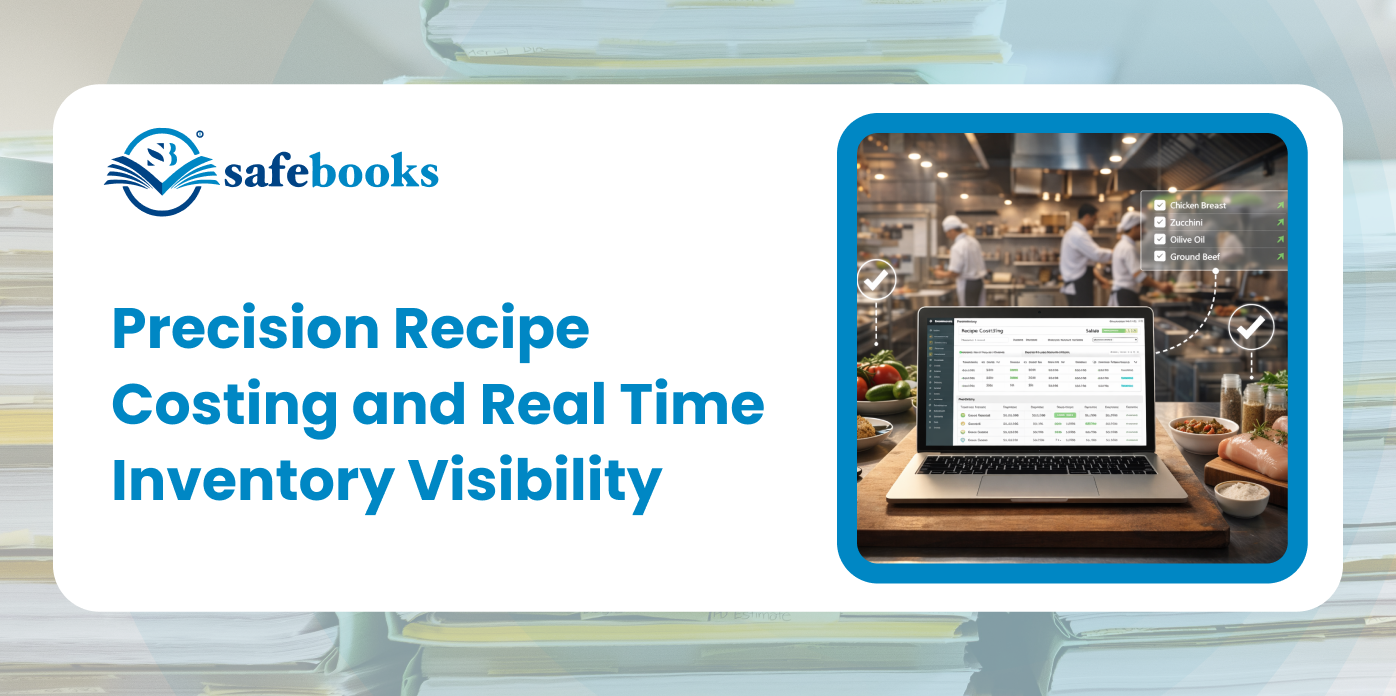
A farm-to-table restaurant generating approximately 1.6 million dollars in annual revenue struggled with inconsistent inventory tracking and unclear recipe costing. SafeBooks implemented Restaurant365 inventory and costing modules to improve accuracy, reduce waste, and strengthen menu-level profitability.
This engagement reflects SafeBooks system integration and financial process expertise, similar to its work in AR and AP Software Integration and operational workflow optimization.
1. Client Overview
Industry: Farm-to-table restaurant
Employees: 18
Annual Revenue: Approximately 1.6 million dollars
Systems Before SafeBooks
- QuickBooks Online for bookkeeping
- Excel spreadsheets for inventory tracking
- Recipes stored in Word documents
Core Problem
Food cost was estimated rather than calculated. Inventory counts lacked consistency. Delivery discrepancies were not tracked. Owners suspected margin leakage but could not quantify it.
Many growing businesses face similar blind spots when inventory systems are spreadsheet-driven, a challenge related to broader financial system limitations discussed in Cloud vs On Prem Accounting for CPA Firms.
2. Challenges Before Implementation
No Accurate Recipe Costing
Recipes were documented informally. Ingredient pricing was estimated. Menu prices were set based on intuition instead of contribution margin analysis.
Inconsistent Inventory Counts
Different staff members used different counting methods. There was no variance report comparing theoretical food usage to actual usage.
Food Waste and Shrinkage Not Measured
Delivery discrepancies went unnoticed. Over portioning by prep staff was common but untracked. Waste patterns were assumed rather than measured.
3. SafeBooks Engagement
SafeBooks structured the implementation across three focused phases to move from guesswork to measurable control.
Phase 1: Recipe Costing Setup
SafeBooks entered every active recipe into Restaurant365 at the ingredient level.
Recipe Costing Framework
Area | Implementation |
Ingredient Mapping | Linked each ingredient to vendor catalog pricing |
Cost Updates | Automatic cost updates based on vendor price changes |
Portion Standardization | Defined consistent portion measurements |
Category Alignment | Mapped recipes to menu categories for reporting |
Ingredient costs were tied directly to vendor catalogs so that price fluctuations updated automatically inside R365. This ensured that contribution margins reflected real-time purchasing data.
Portion standards were clearly defined to eliminate subjective plating variations.
Phase 2: Inventory Modernization
SafeBooks implemented structured inventory controls using the R365 mobile application.
Inventory Controls Introduced
Control | Outcome |
Weekly cycle counts | Reduced counting gaps |
Theoretical vs actual usage reports | Identified over portioning |
Vendor delivery reconciliation | Flagged discrepancies |
Waste tracking logs | Measured shrinkage patterns |
Instead of monthly or inconsistent counts, the restaurant adopted weekly inventory cycles. Variance reports compared theoretical consumption based on sales data to actual on-hand inventory. This immediately surfaced over portioning and waste.
Vendor invoices were reconciled against purchase orders and delivery quantities, eliminating unnoticed short shipments.
Phase 3: Menu Engineering and Margin Optimization
Once accurate costing and inventory controls were in place, SafeBooks analyzed menu-level profitability.
Contribution margin analysis was performed for every item. The team evaluated sales volume, cost per plate, and gross profit per item.
Recommendations Delivered
- Targeted price adjustments for underpriced items
- Portion control refinements for high variance dishes
- Ingredient substitutions for low-margin plates
- Highlighting high-margin signature items in menu positioning
This structured menu engineering approach helped owners make decisions based on data rather than intuition.
4. Results After Implementation
Recipe Costing Accuracy Improved
Recipe costing accuracy reached more than 95 percent due to vendor-linked ingredient pricing and standardized portions.
Negative Margin Items Identified
Two menu items were found to be generating negative contribution margins. Pricing and ingredient adjustments were implemented immediately.
Food Waste Reduced
Within 60 days, food waste declined by 10 percent. Theoretical versus actual reporting allowed managers to identify portion control issues and prep inconsistencies.
Improved Profitability on Signature Dishes
Several high-volume dishes saw improved margins after portion refinement and pricing optimization. Owners gained clarity on which items drove profit and which required adjustment.
5. What This Case Shows About SafeBooks
Restaurants often underestimate the impact of precise recipe costing and inventory controls. Without structured reporting, margin leakage goes unnoticed. SafeBooks combines system configuration, operational discipline, and financial analysis to convert raw sales data into actionable profitability insights.
This farm-to-table restaurant selected SafeBooks because it needed structured controls, automated costing, and reliable variance reporting rather than spreadsheet tracking.
If your restaurant is exploring Restaurant365 inventory and recipe costing implementation, connect through Get Started to discuss your operational goals.
Case Study
Recent Case Studies