
Standardizing Workflows Across a Multi-Office CPA Firm
How a CPA Firm Increased Tax Preparation Capacity Without Expanding Its Team
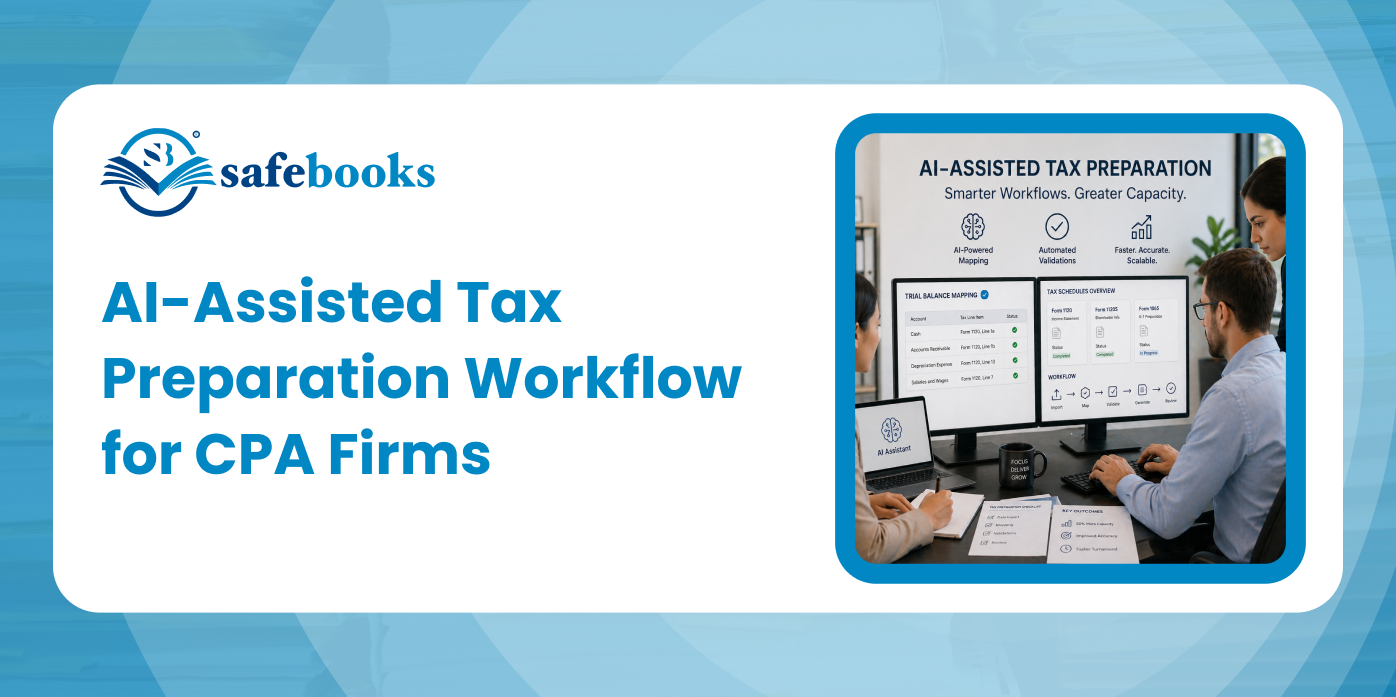
A mid-sized CPA firm handling business tax returns struggled with limited preparation capacity during peak season. Manual processes slowed down turnaround time and increased reliance on experienced staff. By implementing structured workflows supported by AI-assisted tools, the firm significantly improved efficiency and expanded its ability to take on more clients.
This approach is widely used across Tax Support and Backoffice Support to help CPA firms scale without increasing internal headcount.
Client Overview
The client is a mid-sized CPA firm focused on corporate and partnership returns, including Forms 1120, 1120S, and 1065. Their team handled high volumes during tax season but faced operational limits due to manual workflows.
Objectives
- Increase tax preparation capacity
- Reduce time spent on manual data entry
- Enable junior staff to handle more complex returns
- Improve accuracy before review stage
Key Challenges
Time-Intensive Preparation Process
Each return required manual trial balance mapping, adjustments, and schedule preparation, taking 3 to 5 hours per return.
Heavy Dependence on Senior Staff
Complex returns required experienced preparers, limiting how much work the firm could take on.
Review Bottlenecks
Errors and inconsistencies often appeared late, increasing review time and slowing delivery.
Why the Firm Selected This Approach
The firm focused on improving preparation efficiency rather than increasing team size.
This included:
- Structured workflows for tax preparation
- AI-assisted mapping and validation
- Standardized processes for consistency
These practices align with modern approaches used in Accounting Firm Services.
How the Workflow Was Optimized
A combination of process standardization and AI-assisted tools transformed how tax returns were prepared.
Phase 1: Workflow Assessment
The firm evaluated its tax preparation process and identified repetitive manual tasks that slowed down productivity.
Phase 2: AI-Assisted Tax Preparation
The new system enabled:
- Automatic trial balance mapping to tax line items
- Draft generation of financial schedules
- Early identification of inconsistencies
This reduced manual effort and improved data accuracy before review.
Phase 3: Process Standardization
Structured workflows ensured:
- Consistent preparation approach across staff
- Clear documentation for reviewers
- Reduced dependency on individual expertise
Firms looking to implement similar systems can explore Tax Support Services.
Results After Implementation
Increased Preparation Capacity
Preparation time reduced by 50 percent, allowing the firm to handle more returns during busy season.
Better Use of Junior Staff
Less experienced staff were able to work on more complex returns with structured support.
Faster Review Cycles
Fewer errors reached the review stage, improving turnaround time.
Improved Scalability
The firm increased output without expanding its internal team.
What This Case Shows About Modern CPA Firms
Scaling a tax practice is not only about hiring more staff. It is about improving how work gets done.
With structured workflows and AI-assisted processes, firms can:
- Increase output
- Improve accuracy
- Reduce dependency on senior staff
- Handle peak season more effectively
Explore similar transformations in the Case Studies section.
If your firm is facing capacity constraints during tax season, a structured and technology-driven approach can help you scale efficiently.
Start your journey through the Get Started page or connect via the Contact Us page.
Case Study
Recent Case Studies