
How Safebooks Reduced Audit Review Bottlenecks for a CPA Firm
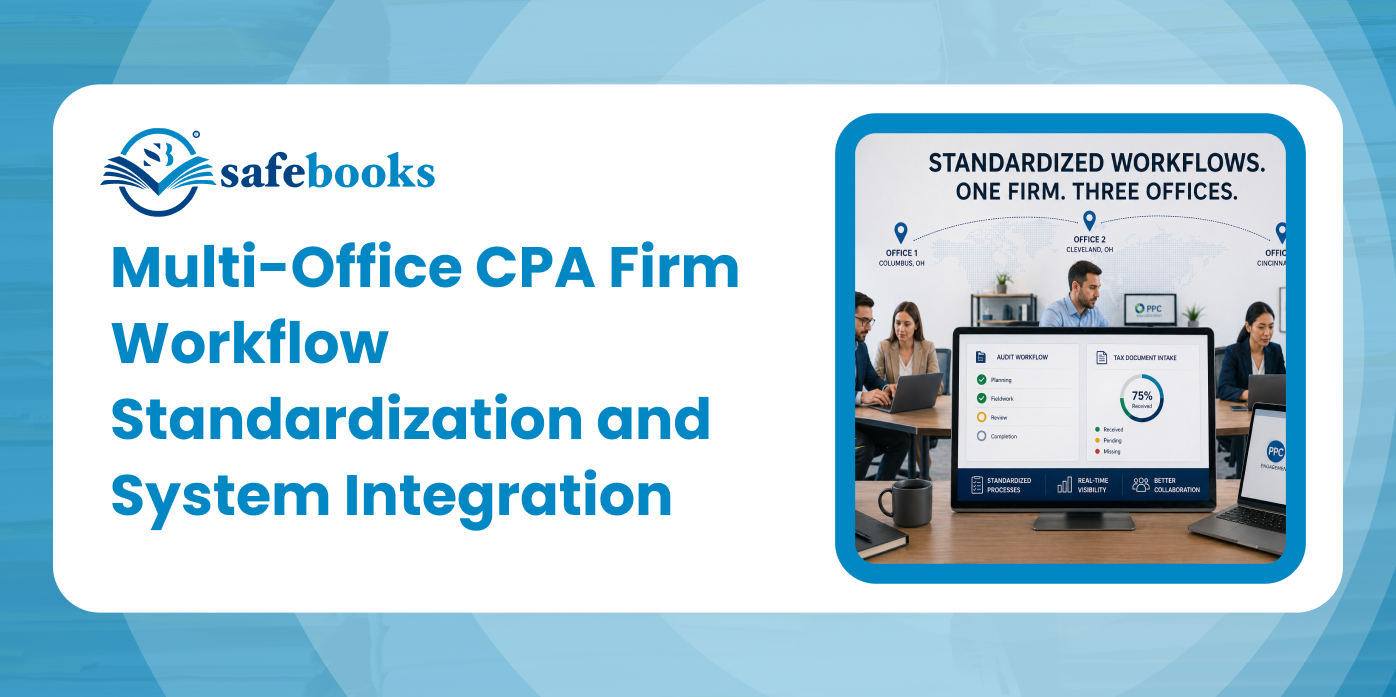
How a Multi-Office CPA Firm Standardized Workflows and Improved Operational Efficiency
A regional CPA firm operating across multiple locations struggled with inconsistent workflows between audit and tax teams. A structured system using standardized checklists and automated data collection helped the firm reduce review time, improve consistency, and scale operations across all offices.
This approach is commonly applied across Audit Support Services, Tax Support, and Backoffice Support to help CPA firms scale efficiently.
Client Overview
The client is a regional CPA firm with offices in three locations, offering both tax and audit services. Each office operated independently, leading to variations in processes, documentation, and review standards.
Objectives
- Standardize audit and tax workflows across offices
- Reduce review time and rework
- Improve consistency in documentation
- Enable easier onboarding of new staff
Key Challenges
Disconnected Workflows Across Offices
Each office followed its own audit procedures and checklist formats, making it difficult to maintain uniform quality.
Manual Tax Document Collection
Tax teams relied on emails and manual tracking, leading to missing documents and delays.
High Review Effort
Reviewers spent significant time rechecking and reorganizing files due to inconsistent structures.
Why the Firm Selected This Approach
The firm prioritized aligning systems, processes, and teams across multiple locations.
This included:
- Implementation of standardized audit checklists
- Automated document intake systems
- Unified SOPs for all teams
- A structured approach to scaling multi-office operations
This model aligns with best practices used across Accounting Firm Services.
How the Workflow Was Transformed
A structured, system-driven approach was implemented to unify operations across all offices.
Phase 1: Workflow Assessment Across Offices
Existing audit and tax processes across all locations were reviewed to identify inconsistencies in documentation, procedures, and review methods.
Phase 2: System Standardization
The transformation included:
- PPC checklists across all audit engagements
- DataFlow for structured tax document collection
- Standardized file structures and naming conventions
Phase 3: Process Integration and Team Alignment
Unified SOPs were created and teams across offices were aligned to follow consistent workflows.
This ensured:
- Same audit approach across all engagements
- Consistent tax document handling
- Reduced dependency on individual staff methods
Firms looking to implement similar systems can explore Tax Support Services for structured workflow setups.
Results After Implementation
Standardized Operations Across Offices
All teams followed a consistent workflow, improving quality and predictability.
Reduced Review Time
Review effort dropped significantly as files were already structured and complete.
Easier Staff Onboarding
New hires could quickly adapt due to clear processes and standardized systems.
Improved Scalability
The firm was able to handle higher volumes of tax and audit work without operational confusion.
What This Case Shows About Scaling CPA Firms
Scaling across multiple offices requires more than hiring more people. It requires alignment.
With standardized workflows and integrated systems, firms can:
- Maintain consistent quality
- Reduce internal friction
- Improve team collaboration
- Scale confidently across locations
You can explore similar transformations in the Case Studies section.
If your firm operates across multiple locations and struggles with inconsistent workflows, you can build a unified and scalable system with the right structure and support.
Start your journey through the Get Started page or connect via the Contact Us page.
Case Study
Recent Case Studies