
Client Overview
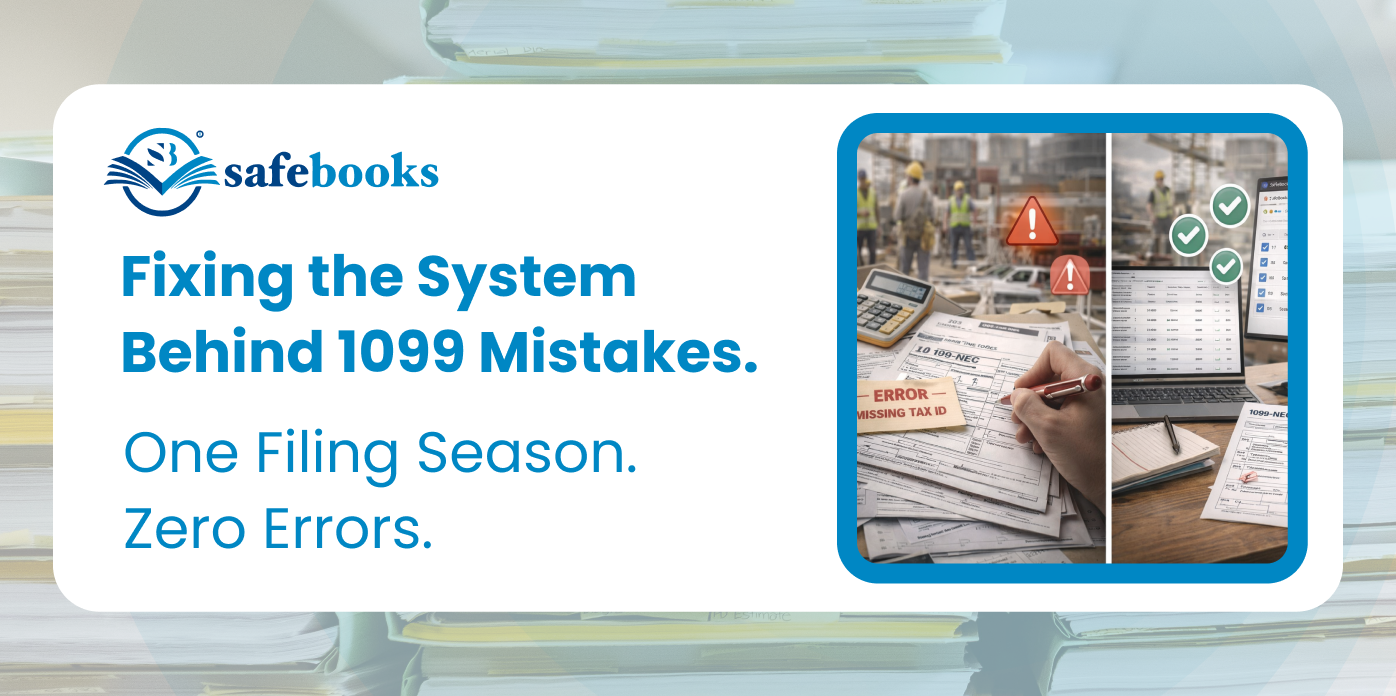
A residential construction contractor working with over 30 subcontractors was facing ongoing compliance issues related to 1099 filings.
The business had steady operations and consistent payments to vendors, but year-end reporting was becoming a recurring challenge.
Instead of being a routine process, 1099 filing turned into a high-risk activity every year.
The Problem Behind Repeated Filing Errors
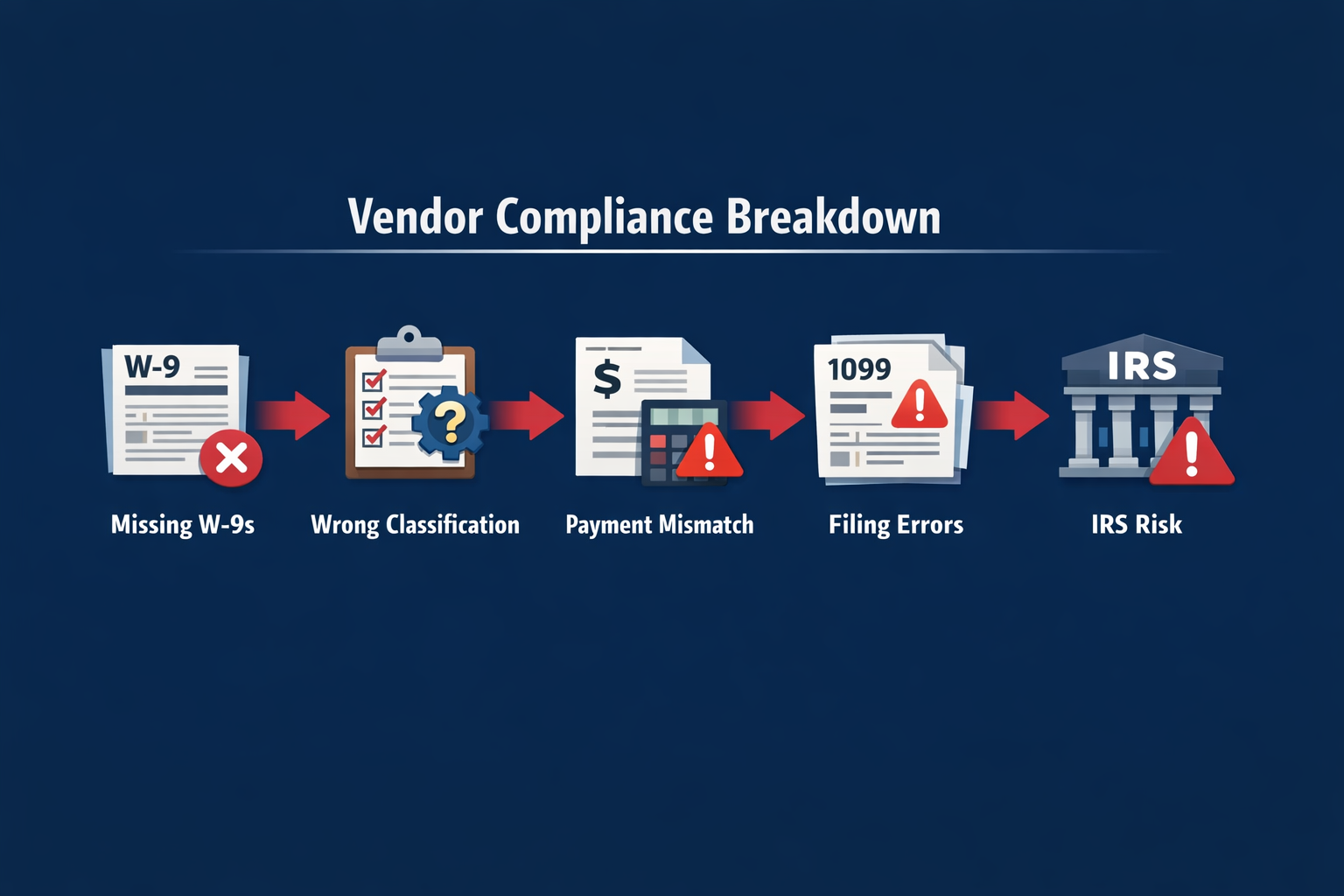
The contractor was consistently filing incorrect 1099 forms due to multiple gaps in vendor data and tracking.
Key issues included:
- Missing or incomplete W-9 forms
- Incorrect vendor classifications
- Payment mismatches between records and filings
- Lack of a centralized system to track subcontractor payments
These issues created compliance risks and increased the chances of IRS notices.
More importantly, the errors were not isolated. They were a result of an unstructured system.
This is a common issue for contractors operating without a defined remote accounting workflow.
Why 1099 Compliance Breaks Down for Contractors
Construction businesses often work with multiple subcontractors across different projects.
Without proper systems:
- Vendor information is collected inconsistently
- Payments are tracked across multiple sources
- Classifications are not reviewed regularly
By the time filing season arrives, businesses are forced to reconcile months of incomplete or inaccurate data.
As explained in this guide on Form 1099 filing and reporting requirements, compliance depends heavily on maintaining accurate records throughout the year, not just at year-end.
The SafeBooks Approach
SafeBooks focused on fixing the foundation first and then building a system that ensured ongoing compliance.
1. W-9 Collection and Validation
All subcontractor records were reviewed and updated.
This included:
- Collecting missing W-9 forms
- Verifying taxpayer information
- Standardizing vendor data across systems
This step ensured that every vendor had complete and accurate documentation.
2. Vendor Classification Matrix
A structured classification system was introduced to clearly define vendor types.
This helped:
- Differentiate between contractors and other vendor categories
- Ensure correct 1099 applicability
- Maintain consistency across all records
This removed ambiguity from the process.
3. Automated 1099 Tracking System
SafeBooks implemented a system that tracked vendor payments throughout the year.
Key features included:
- Real-time tracking of eligible payments
- Automated categorization of transactions
- Year-round monitoring instead of year-end corrections
This approach aligned with modern systems discussed in this guide on best tech stack for offshore accounting firms.
4. Process Standardization
The entire workflow was structured to ensure compliance was maintained continuously.
Businesses evaluating similar systems can refer to this guide on how to evaluate an offshore accounting partner to understand how process maturity impacts compliance and reporting accuracy.
The Outcome That Eliminated Compliance Risk
Once the system was implemented, the contractor saw immediate improvements.
Key Results:
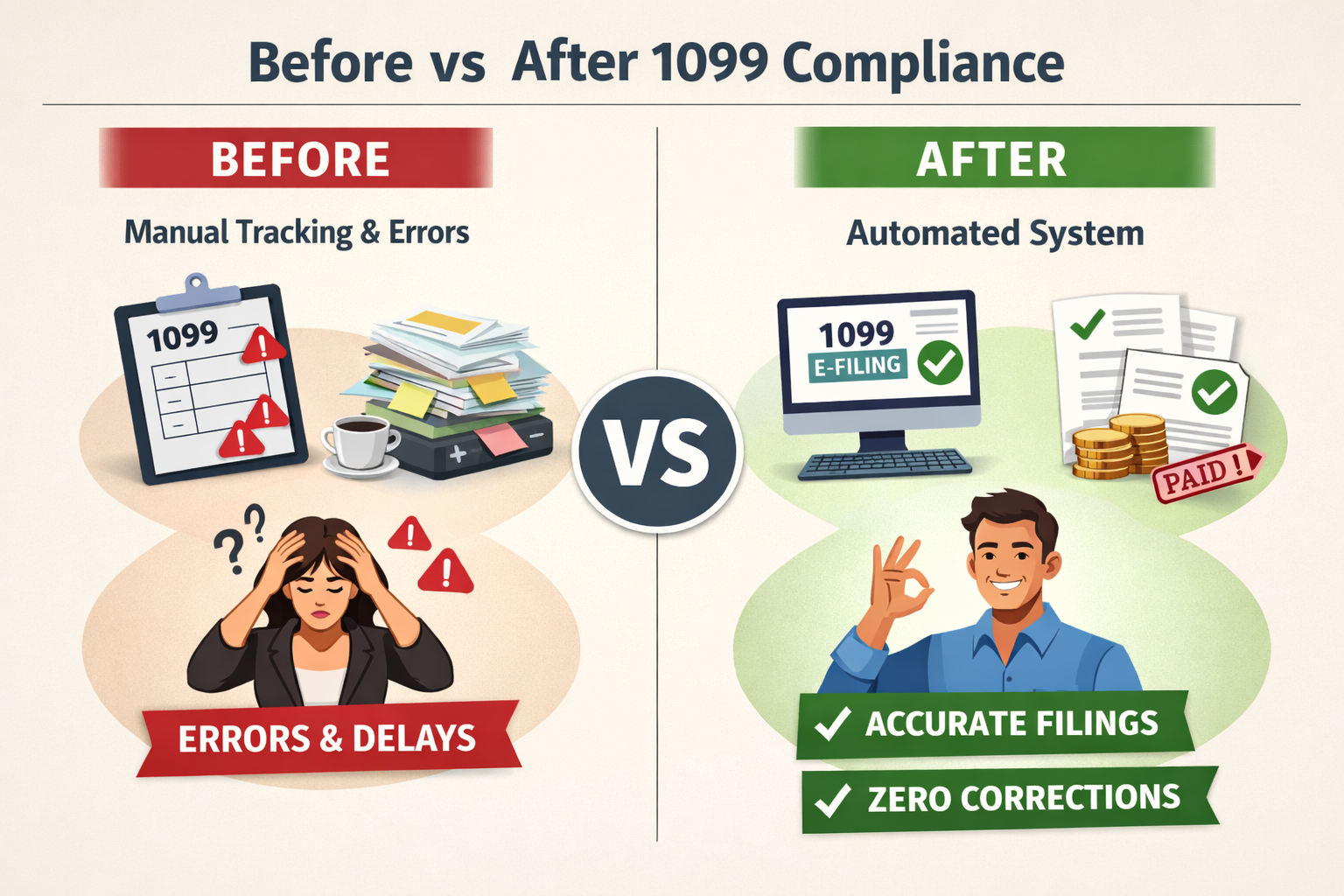
- Zero 1099 filing errors for the first time
- No IRS notices or correction filings
- Complete visibility into subcontractor payments
- Reduced stress during filing season
The business moved from reactive corrections to proactive compliance.
What This Means for Construction Businesses
1099 errors are rarely caused by filing mistakes alone. They usually originate from poor data management throughout the year.
Without structured systems:
- Errors accumulate over time
- Compliance risks increase
- Filing becomes a stressful process
With the right setup:
- Vendor data remains accurate
- Payments are tracked correctly
- Filing becomes predictable and error-free
Before implementing systems or outsourcing, it is useful to review key considerations outlined in this guide on questions to ask before hiring a remote accounting team.
Building a System That Keeps You Compliant All Year
Compliance is not just about meeting deadlines. It is about having a system that ensures accuracy at every step.
SafeBooks combines:
- Structured vendor management systems
- Continuous monitoring of payments
- Secure handling of financial data
You can also learn how data security is maintained in this article on how SafeBooks protects client financial data.
When Compliance Stops Being a Year-End Fire Drill
The biggest shift for the contractor was not just eliminating errors. It was removing uncertainty.
Instead of scrambling during filing season, the business had a system that kept everything organized throughout the year.
That shift reduced risk, improved efficiency, and created confidence in compliance.
If your business still treats 1099 filing as a last-minute task, it may be time to rethink the system behind it.
Start here: Contact SafeBooks