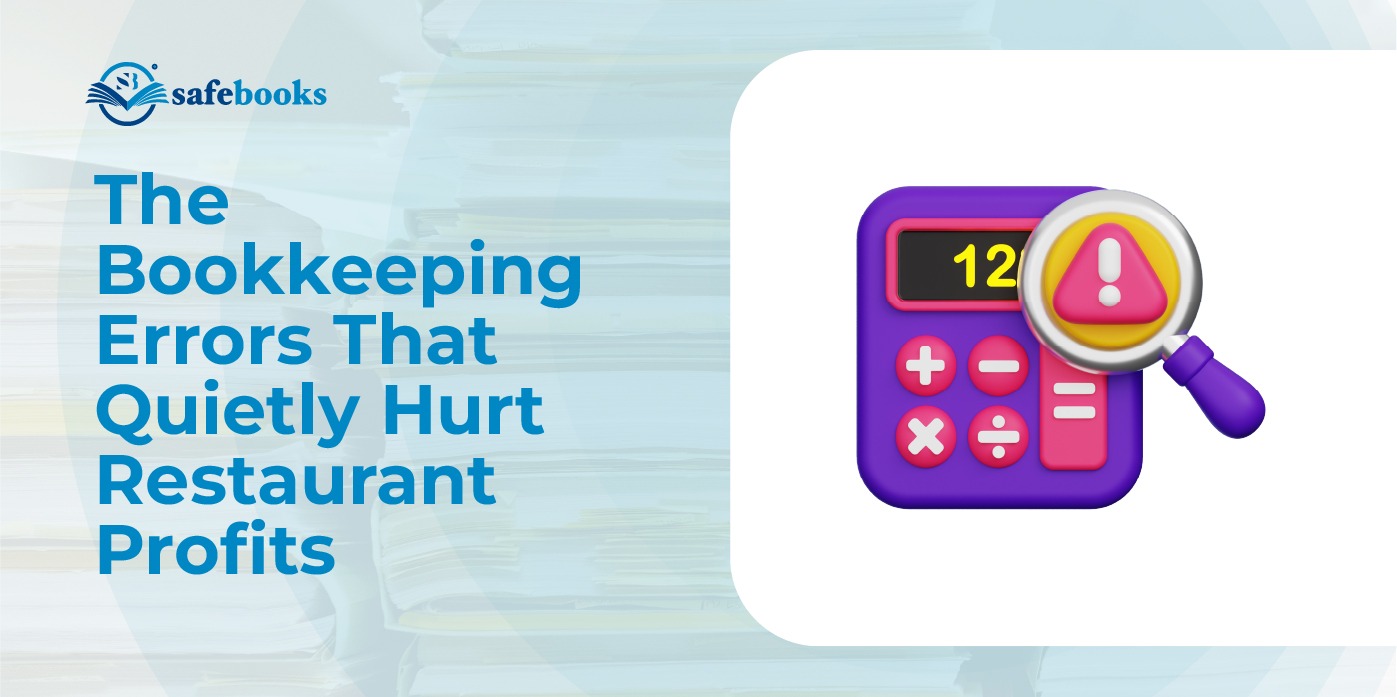
Many Restaurants Lose Money Without Realizing It
Many restaurant owners focus on food, service, and staff, but small bookkeeping mistakes in the background can quietly damage profits.
A restaurant can be full every night and still struggle financially. The issue is rarely sales. It is what happens after the sale is recorded.
Why Restaurant Bookkeeping Becomes Difficult to Manage
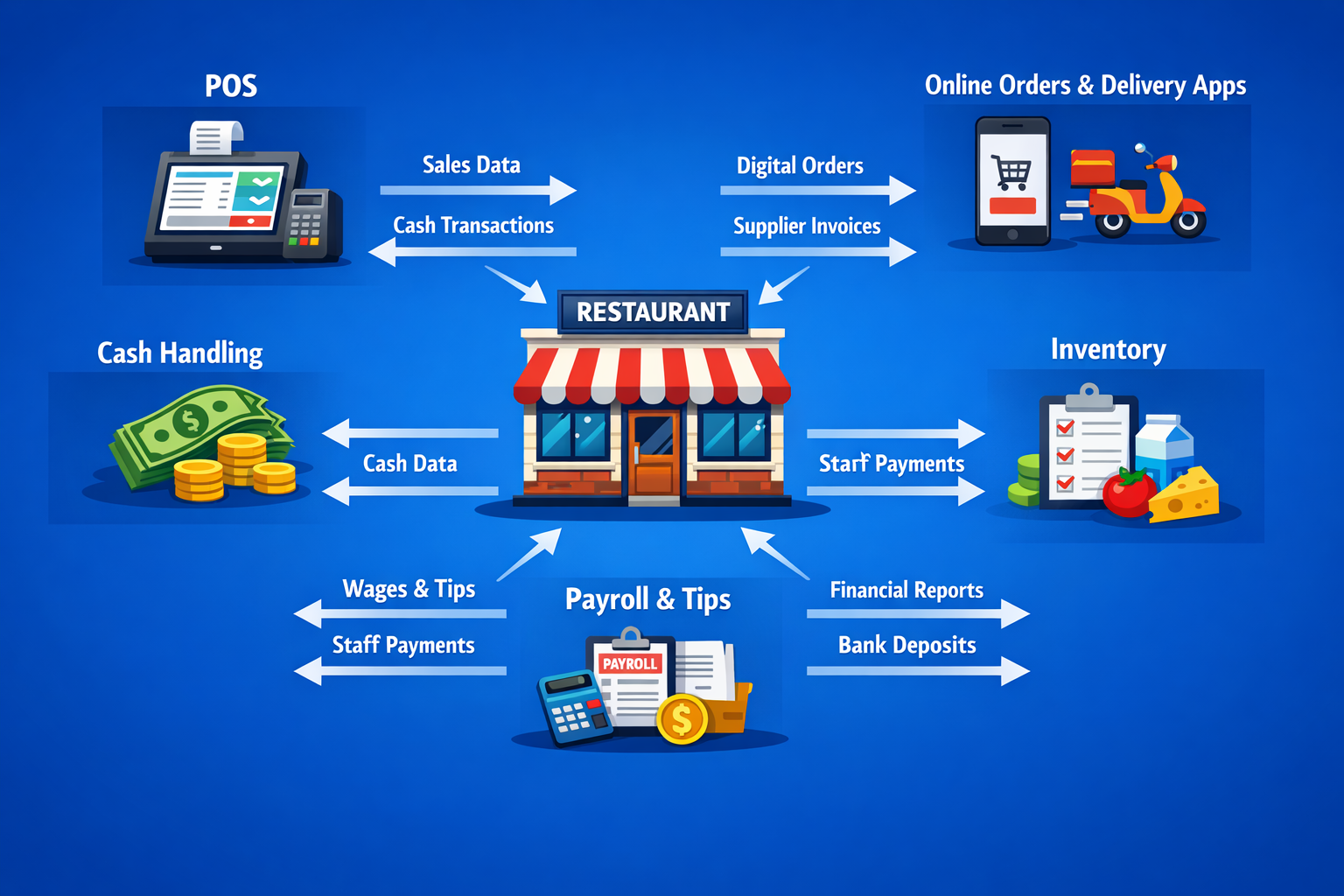
Restaurant finances move fast and involve multiple systems.
Every day, you deal with:
- Cash and card payments
- Third-party delivery platforms
- Inventory that changes constantly
- Staff wages, tips, and payouts
All of these need to match perfectly. When they don’t, the books start getting messy.
Over time, these mismatches lead to inaccurate reports, unclear margins, and poor decision-making. This is one of the most common restaurant accounting mistakes owners face.
Cash Handling Mistakes That Impact Daily Revenue
Cash handling errors are one of the biggest contributors to financial gaps.
Common issues include:
- Incorrect change given to customers
- Cash sales not recorded properly
- Untracked payouts from the register
- No structured closing process
This leads to over or short situations where actual cash does not match recorded sales.
While these may seem like small errors, they add up quickly and directly impact profitability.
What works better:
- Daily cash counts
- Verified shift closures
- Clear accountability processes
Strong controls reduce both human error and potential misuse.
Inventory Shrinkage That Reduces Profit Margins
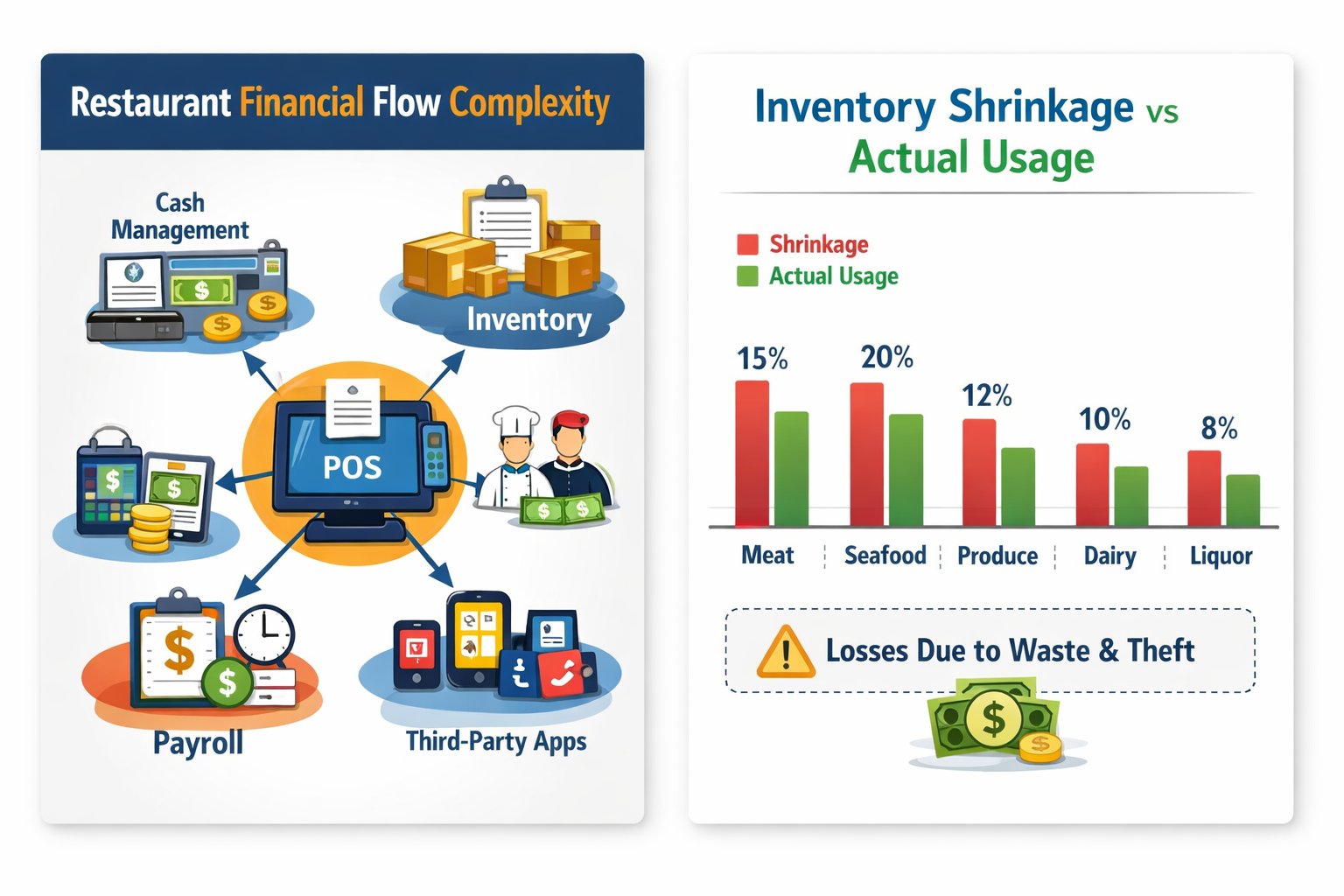
Inventory is one of the largest cost drivers in any restaurant.
Shrinkage often happens due to:
- Spoilage
- Over-ordering
- Poor storage practices
- Portion inconsistencies
- Internal losses
If inventory is not tracked properly, cost of goods sold becomes inaccurate. This creates a misleading picture of profitability.
For example, overstated inventory can make profits look higher than they actually are, while understated inventory can make performance look weaker than reality.
A structured system, supported by a remote accounting workflow setup, helps align inventory tracking with financial reporting.
Payroll and Tip Reporting Errors
Labor costs are complex in the restaurant industry due to wages, tips, and service charges.
Common bookkeeping mistakes include:
- Mixing tips with regular income
- Not tracking tip payouts correctly
- Misclassifying service charges
- Incorrect payroll calculations
Tips are not business revenue. They are liabilities until paid to employees.
Incorrect handling of tips can lead to:
- Inaccurate financial reports
- Compliance issues
- Misleading labor cost percentages
Using professional restaurant accounting support helps ensure proper classification and reporting.
Lack of Daily Reconciliation Practices
One of the most critical mistakes in bookkeeping for restaurants is skipping daily reconciliation.
Many restaurant owners review numbers weekly or monthly. By then, identifying discrepancies becomes difficult.
Without reconciliation:
- Missing deposits go unnoticed
- Payment processor fees are not tracked
- Delivery platform payouts do not match orders
- Cash differences accumulate
Daily reconciliation ensures every transaction is accounted for.
To understand how this impacts your finances, read this guide on why restaurant sales reports don’t match bank deposits.
Weak Systems Lead to Financial Leakage
Most restaurant financial mistakes are not due to lack of effort. They are due to lack of systems.
Manual tracking and disconnected tools often result in:
- Data mismatches
- Delayed reporting
- Missing entries
- Poor visibility
On the other hand, structured systems help:
- Improve financial accuracy
- Reduce manual errors
- Provide real-time insights
- Support better decision-making
Bookkeeping should act as a control system, not just a reporting function.
The Real Cost of These Bookkeeping Mistakes
These errors may seem minor individually, but together they have a direct impact on profitability.
Common financial impacts:
- Cash discrepancies reduce actual revenue
- Inventory shrinkage increases food costs
- Payroll errors distort labor ratios
- Missing reconciliation hides true performance
Restaurants operate on tight margins. Even small inefficiencies can significantly affect long-term sustainability.
Expert Insight
“Restaurant bookkeeping is not just about recording numbers. It is about building a system where every transaction is tracked, matched, and understood. When that system is missing, profit leakage becomes unavoidable.“
Anshul Agrawal, Accounts Director (CA), SafeBooks
Accurate Books Create Stronger Restaurant Decisions
Clear and accurate bookkeeping provides visibility into your business.
When financial data is reliable:
- You understand your true margins
- You control costs more effectively
- You make better operational decisions
Restaurants that maintain structured bookkeeping systems are better positioned for consistent growth and stability.
Fixing Small Errors Today Prevents Bigger Problems Tomorrow
Most restaurant bookkeeping issues do not start as major problems. They begin as small gaps that go unnoticed. Over time, those gaps grow into financial stress, poor decisions, and lost profits.
The right systems, processes, and oversight can eliminate these risks early.
If your restaurant is facing challenges with reconciliation, inventory tracking, or financial clarity, it may be time to review your bookkeeping approach. You can connect with the team at SafeBooks to understand how a structured accounting system can support your restaurant’s growth.