
Automating Multi-State Sales Tax Compliance for a Growing E-Commerce Brand
A fast-growing e-commerce brand selling across multiple U.S. states began facing increasing complexity in sales tax compliance. As their reach expanded, so did their obligations under state nexus rules.
Manual tracking through spreadsheets led to missed filings, incorrect threshold monitoring, and penalties from multiple states.
Safebooks stepped in to replace manual processes with a structured automation system, ensuring accurate tax calculation, timely filings, and complete compliance. Situations like this often arise when financial systems are not built to scale, similar to what is explained in remote accounting workflow setup.
1. Client Snapshot
Type: E-commerce brand selling nationwide
Existing Setup
- Sales across Amazon, Shopify, and direct channels
- Manual spreadsheet-based tax tracking
- No centralized system for nexus monitoring
- Reactive approach to filings
Core Issue
Multi-state sales tax obligations were not being tracked or managed systematically, leading to compliance gaps.
2. What Created the Problem
Sales Tax Nexus Expansion
As the business crossed state thresholds, it triggered tax obligations in multiple jurisdictions without clear tracking.
Manual Tracking Limitations
Spreadsheets failed to handle:
- State-wise threshold monitoring
- Filing deadlines
- Rate changes across jurisdictions
Missed Filings and Penalties
Two states imposed penalties due to delayed or incorrect filings.
Lack of Integration
Sales data from different platforms was not consolidated, leading to inconsistencies in reporting.
3. Safebooks Engagement
Safebooks implemented a structured automation framework focused on accuracy, integration, and scalability.
Phase 1: System Setup and Integration
Safebooks established a centralized tax automation system.
Key Actions
Area | Action |
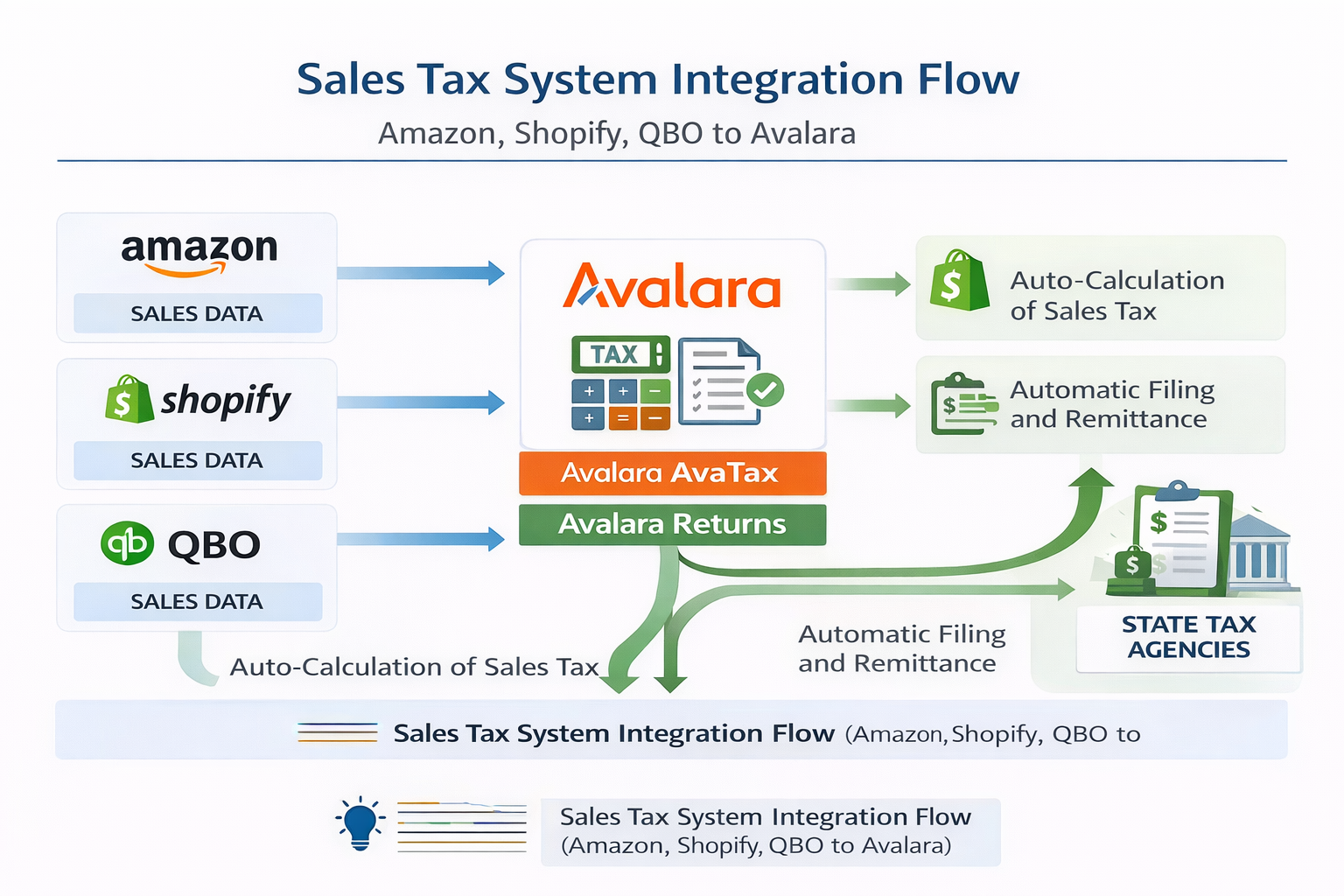
Tax Engine Setup | Configured Avalara AvaTax and Returns |
Platform Integration | Connected Amazon, Shopify, and QuickBooks Online |
Data Flow | Centralized transaction data across all channels |
Phase 2: Nexus and Taxability Mapping
Safebooks created a state-by-state compliance structure.
- Identified nexus thresholds for each state
- Mapped product taxability based on applicable rules
- Built state-specific tax profiles
This step ensured that every transaction was taxed correctly based on location and product category.
Phase 3: Automation of Filing and Remittance
Safebooks implemented automated compliance workflows.
System Capabilities
- Real-time tax calculation at checkout
- Automated filing across states
- Scheduled remittance of collected taxes
- Continuous monitoring of threshold changes
4. Results After Implementation
Full Automation Achieved
Sales tax is now automatically calculated, filed, and remitted across all applicable states.
Zero Penalties
No penalties have occurred since implementation.
Elimination of Manual Work
Spreadsheets and manual tracking have been completely removed.
Improved Compliance Accuracy
Accurate reporting across jurisdictions with no discrepancies.
Scalable Expansion
The business can now expand into new states without compliance concerns.
These results reflect the impact of structured financial systems, similar to the outcomes seen with Tax Support Services.
5. Why This Issue Happens Frequently
Sales tax compliance becomes complex as businesses scale across states.
The problem is not just tax rates, but:
- Constantly changing nexus thresholds
- Different state rules for product taxability
- Multiple sales channels generating fragmented data
Manual systems are not designed to handle this level of complexity.
This is why automated workflows, as explained in Remote Accounting Workflow Setup, are critical for growing businesses.
From Manual Compliance to Automated Control
This case highlights how sales tax challenges can be solved with the right system.
Instead of reacting to notices and penalties, the focus shifted to:
- Building a centralized system
- Automating calculations and filings
- Ensuring real-time compliance
The result was not just error reduction, but complete operational clarity.
The client now operates with confidence, knowing compliance is handled automatically as the business grows.
If your business is managing sales tax manually, the risks increase with every new state you enter.
Take the next step with Get Started.